

Think of a cyber security consultant as a specialist advisor who shows organisations how to defend their most important digital assets from attack. They're more than just tech support; they become strategic partners, finding weak spots, building stronger defences, and making sure the business can run safely and with confidence.
Your Strategic Partner in Digital Defence
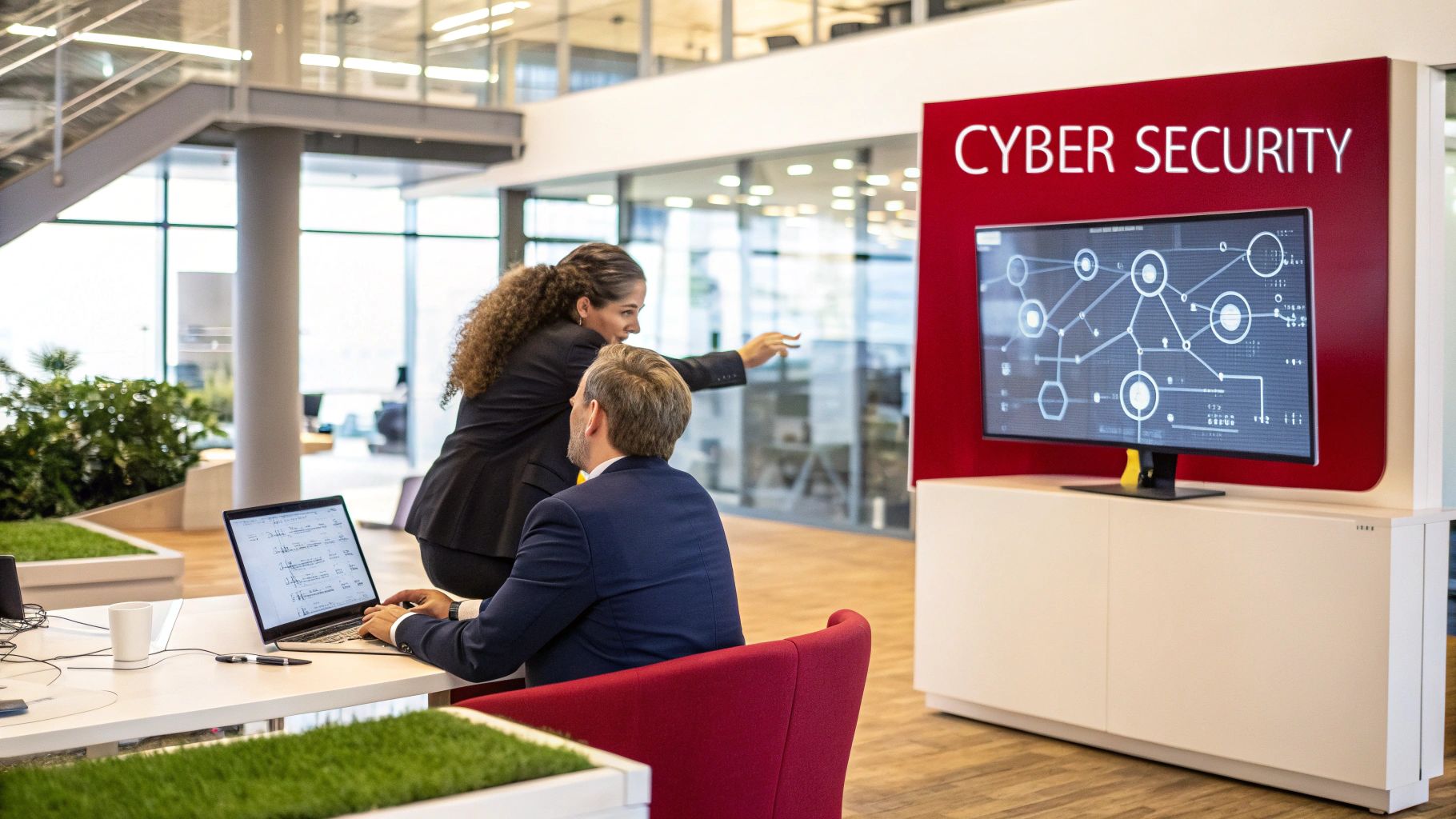
It’s a huge mistake to see a cyber security consultant as just another IT cost. In a world where everything is connected, they are absolutely essential partners for survival and growth. Don't think of them as a repair person you call when something breaks; picture them as the master architect designing a fortress to protect your crown jewels—your data and systems.
Just like a real architect surveys the land and plans for every possible threat before laying a single brick, a consultant dives deep into your organisation’s unique risks. They don't hand you a generic blueprint. Instead, they build a security framework specifically for your operations, your data, and your business goals.
And this proactive approach has never been more critical. Australian businesses are swimming in a sea of digital threats, from ransomware that can shut you down completely to quiet data breaches that slowly poison customer trust. Simply hoping for the best is a strategy that no longer works.
The Escalating Cost of Inaction
The price of doing nothing, both financially and to your reputation, is staggering. The latest figures from the Australian Cyber Security Centre (ACSC) show a sharp increase in reported cyber incidents, and they hit businesses right where it hurts. The average cost for a small business is now over AUD 49,600 per incident, while bigger companies are looking at losses up to AUD 63,600.
This isn't just a hypothetical problem; it’s a direct hit to the bottom line that's forcing Australian executives to put cyber security at the very top of their priority list. As you can imagine, this is fuelling a massive demand for expert consultants.
But those numbers only tell part of the story. They're just the immediate financial sting. The long-term damage runs much deeper and often includes:
- Reputational Damage: A public breach can wipe out years of hard-won customer trust in a single afternoon.
- Operational Disruption: A successful attack can grind your entire business to a halt, messing with supply chains, customer support, and, of course, revenue.
- Regulatory Penalties: Failing to protect data can lead to eye-watering fines and legal battles you'd rather avoid.
- Loss of Competitive Edge: If your trade secrets or intellectual property get stolen, it can seriously damage your position in the market.
A cyber security consultant shifts your security from a reactive, panicked expense into a proactive, strategic advantage that builds a resilient and trustworthy business.
Navigating Complexity with an Expert Guide
The world of digital threats is a complicated, fast-moving beast. New ways to attack pop up every day, and the rules and regulations get stricter every year. If you're a business leader focused on running and growing your company, trying to keep up with it all is a full-time job in itself.
This is exactly where a cyber security consultant proves their worth. They are your expert guide through this messy, confusing landscape. Their job isn't just about technical fixes; it's about translating complex security speak into plain English that makes sense for the business, allowing you to make smart, informed decisions.
A good consultant helps you get clear, actionable answers to the big questions:
- What are our most valuable digital assets?
- Where are we most vulnerable to an attack?
- Are we actually compliant with the laws that apply to our industry?
- What's our game plan if a major incident happens?
When you bring a consultant on board, you're not just buying a service—you're investing in stability and peace of mind. This investment makes sure your security strategy actually supports your business goals, protecting your profits while you focus on innovation. To see how this pays off, check out the ROI of cyber security investments in our detailed guide. This kind of proactive partnership is the foundation for building a successful, secure organisation today.
What Does a Cyber Security Consultant Actually Do?

So, what does a cyber security consultant bring to the table? Think of them as a specialist doctor for your company’s digital health. Their job isn’t just a one-off fix; it's a whole cycle of care. They start with a thorough check-up, develop a custom treatment plan, and provide ongoing advice to keep your business digitally fit for the long haul.
This is what really sets a consultant apart from your day-to-day IT support. They aren't just putting out fires. They’re proactively diagnosing weaknesses, treating the root causes, and preventing the kind of digital sickness that can bring a business to its knees. Their real talent lies in turning technical jargon into a clear, actionable business strategy.
Let’s break down exactly what they do, from the initial diagnosis to building a truly resilient security posture.
The Diagnostic Phase: Risk Assessment and Analysis
Before a doctor can help, they need to run tests and understand the symptoms. A cyber security consultant works the same way, kicking things off with a comprehensive risk assessment. This is the foundational health check for your entire organisation.
This isn’t just a quick scan. It’s a deep dive into your systems, your processes, and even your people to pinpoint exactly where the vulnerabilities are hiding. They're asking the tough questions: Where is our most critical data? Who can access it? And, most importantly, what are the most likely ways a criminal could get in?
The end goal is a detailed map of your unique digital risks. It's not a generic checklist; it's a specific, tailored analysis of your operational reality. A consultant’s outside perspective is invaluable here, as they often spot risks that internal teams, who are deep in the day-to-day grind, might completely miss.
The Treatment Plan: Security Architecture and Policy Design
With a clear diagnosis, it's time for the treatment. The consultant gets to work designing a robust security architecture—the strategic blueprint for all your defences. It's about building a system where different layers of security work in harmony to protect what matters most.
This plan includes the technical stuff you'd expect, like firewalls and encryption, but it goes so much further. A great consultant also crafts clear, practical security policies and procedures. These are the "rules of the road" for your staff, showing them how to handle data safely, spot a phishing email, and report a problem without hesitation.
A consultant's true value lies in their ability to design a security framework that is both strong and practical. Overly complex systems that hinder employees are often bypassed, creating new vulnerabilities.
This work also involves navigating the maze of regulations that businesses face today. A key part of their role is guiding you through complex rules, like the NIS2 cybersecurity directive, ensuring your security measures don't just stop hackers but also keep you compliant.
Testing the Defences: Penetration Testing and Vulnerability Scanning
A treatment plan is only good if it actually works. This is where a cyber security consultant puts on their "ethical hacker" hat and actively tries to break into your systems. The goal? Find the weak spots before a real attacker does.
This process is called penetration testing, and it’s essentially a controlled, simulated cyber attack. It’s an incredibly valuable way to stress-test your new defences and uncover hidden flaws that weren't obvious during the initial assessment.
Here are a few things they'll likely target:
- Network Infrastructure: Probing firewalls, routers, and switches for any gaps.
- Web Applications: Hunting for common bugs like SQL injection or cross-site scripting.
- Employee Awareness: Running simulated phishing campaigns to see how staff react to social engineering.
The findings from these tests give you concrete proof of what’s working and what isn’t, allowing for laser-focused improvements. You can learn more about the different kinds of penetration testing services that help businesses get ahead of threats.
Building Resilience: Incident Response and Training
Let's be realistic: even the most secure organisations can have a bad day. The consultant’s job is to make sure that when—not if—an incident happens, you’re ready to handle it effectively. This is the emergency care plan for your digital health.
They help you build a formal Incident Response Plan (IRP)—a clear, step-by-step playbook for your team to follow the moment an attack is detected. This plan answers the critical questions before you're in a crisis:
- Who is in charge when things go wrong?
- How do we contain the threat and stop it from spreading?
- What are our legal duties to notify customers or authorities?
- How do we get our systems back online and resume business?
Beyond just planning, consultants play a huge role in training your people. With human error factoring into over 80% of data breaches, educating your employees is one of the smartest security investments you can make. Good training turns your team from a potential weak link into your first line of defence.
To bring it all together, the table below summarises the different hats a cyber security consultant wears, moving from high-level strategy to hands-on execution.
Key Roles of a Cyber Security Consultant
| Area of Responsibility | Consultant's Role & Key Activities |
|---|---|
| Risk & Vulnerability Mgt | Conducts comprehensive security audits and risk assessments. Identifies and prioritises threats based on business impact. |
| Security Architecture | Designs multi-layered defence systems. Aligns security controls with business objectives and compliance requirements. |
| Policy Development | Creates clear, enforceable security policies for data handling, access control, and acceptable use. |
| Ethical Hacking | Performs penetration testing and vulnerability scans to proactively uncover weaknesses in networks, applications, and human processes. |
| Incident Response | Develops and tests incident response plans. Provides expert guidance during an active security breach to minimise damage and recovery time. |
| Compliance & Governance | Guides organisations through regulatory frameworks like ISO 27001, ensuring that security practices meet legal and industry standards. |
| Staff Training | Delivers security awareness training programs to educate employees on threats like phishing and social engineering. |
By taking on all these crucial functions, a cyber security consultant becomes far more than a tech expert. They become a strategic partner—someone essential for keeping your business resilient and ready for growth.
Achieving ISO 27001 Certification with a Consultant
For a lot of growing businesses, the idea of getting ISO 27001 certified feels like a huge, intimidating mountain to climb. It’s often seen as some hyper-technical, complex beast that only massive corporations can tame. But that's not really what it's about.
ISO 27001 isn't just a technical checklist. It’s a globally recognised framework for managing your information security in a smart, organised, and repeatable way.
Think of it as the gold standard. It’s how you prove to clients, partners, and regulators that you are absolutely serious about protecting their data. Earning the certification builds incredible trust and can open doors to bigger and better contracts that were previously out of reach.
But let’s be honest, the path to getting there can be a confusing maze. This is exactly why a sharp cyber security consultant isn't a luxury; they're your essential guide.
Your Guide Through the Certification Terrain
Trying to get ISO 27001 certified on your own is a bit like trying to navigate a dense, unfamiliar wilderness without a map or a guide. You might be determined, but you don't know the terrain, the hidden pitfalls, or the quickest and safest route to your destination.
A consultant is that seasoned guide. They’ve walked this path countless times with other organisations and know every twist and turn. They transform what seems like an overwhelming ordeal into a clear, step-by-step project.
Here’s how they lead the way:
- They Plan the Route: It all starts with a gap analysis. This is where they map out your current security practices against what ISO 27001 actually requires.
- They Set Up the Safety Ropes: They work with you to put the right controls and processes in place to protect your critical information.
- They Lead the Climb: Your consultant will guide you through creating the necessary documents, training your people, and getting everything ready for the final audit.
- They Help You Reach the Summit: When the auditors arrive, your consultant is right there with you, making sure you can confidently show how you meet the standard and get certified.
With an expert leading the charge, the whole process feels less like fumbling in the dark and more like a strategic march toward a massive business win.
Scoping the ISMS: Your Foundation for Success
One of the very first things a consultant will tackle with you is defining the scope of your Information Security Management System (ISMS). This is the absolute foundation of the entire project. If you get this part wrong, you’re setting yourself up for wasted time, money, and a whole lot of frustration.
The scope basically answers the question: "What parts of our business will this security system cover?" Will it be the whole company? Just one department? A specific office location or a single product line?
A good consultant helps you answer this strategically. They’ll ask the important questions:
- What are our contractual obligations to our clients?
- Where does our most sensitive data live?
- What are our business goals for getting this certification in the first place?
By getting the scope right from day one, your consultant ensures the project is realistic and perfectly aligned with what your business truly needs. It stops you from the classic mistake of trying to "boil the ocean" and instead focuses your efforts where they'll make the biggest difference.
From Risk Assessment to Strategic Controls
The entire ISO 27001 standard is built around one core idea: managing risk. You simply can't protect what you have if you don't understand the threats you're facing. A consultant brings a structured, objective approach to risk assessment, helping you uncover, analyse, and prioritise the information security risks hiding across your business.
They’ll help you move past vague worries and pinpoint the specific threats that matter to your company. This could be anything from the tangible risk of a ransomware attack taking your systems offline to the more subtle threat of a disgruntled employee walking out the door with your customer list.
Once those risks are on the table, the consultant works with you to choose the right security controls from ISO 27001's list (known as Annex A). This isn’t a box-ticking exercise. It's about making smart, risk-based decisions to implement controls that are both effective and practical for the way you work.
The goal is always to make security a business enabler, not a roadblock.
This graphic shows the fundamental cycle a consultant will guide you through—from the initial assessment right through to continuous improvement.
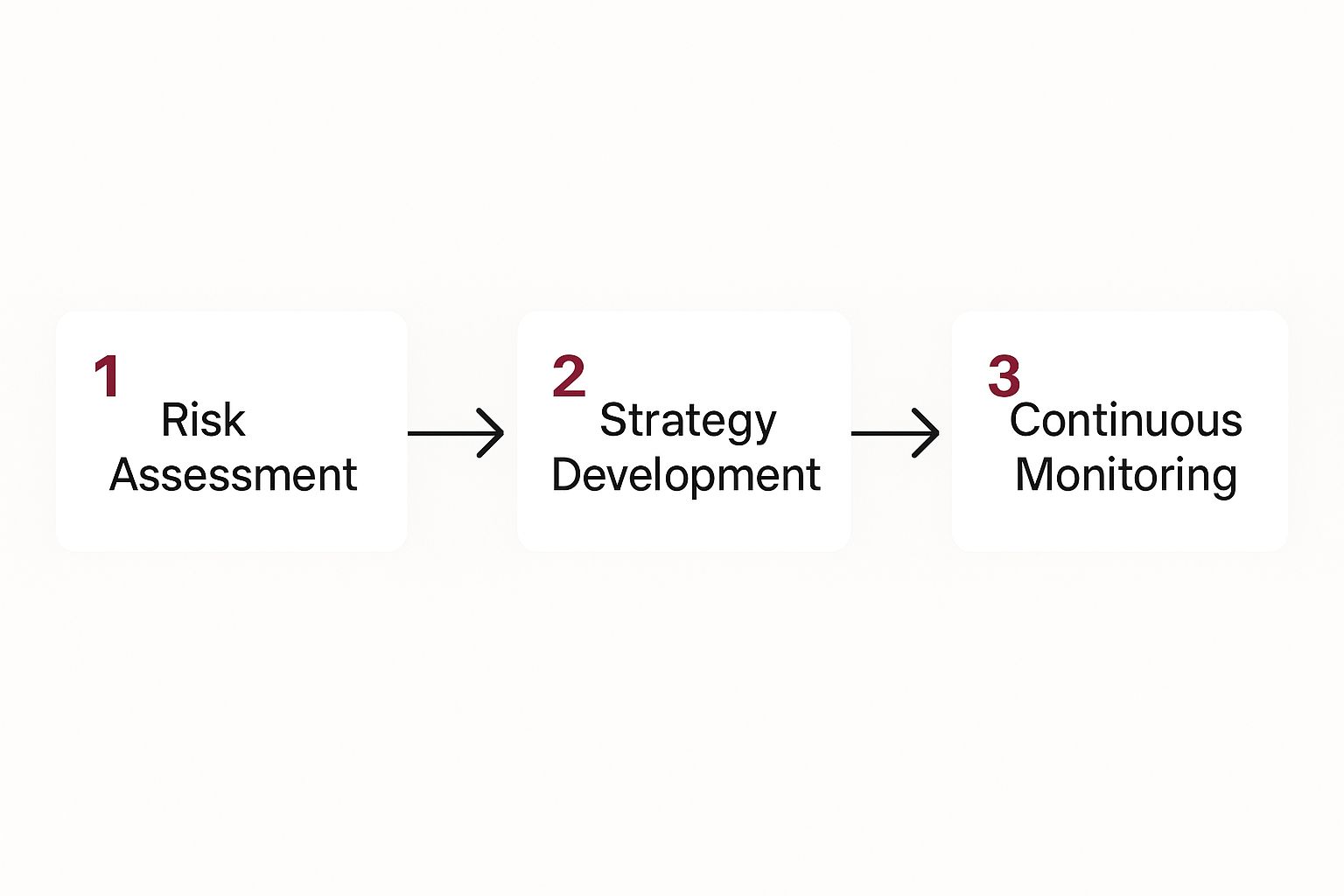
As you can see, security isn't a "set and forget" task. It’s a living process of improvement, and your consultant is there to help manage that cycle.
Documentation and Audit Preparation: The Final Ascent
A big chunk of the ISO 27001 journey is about documentation. You need policies, procedures, and records to prove that your security system is working the way you say it is. For most internal teams, this is easily the most dreaded part of the whole process.
A consultant makes this part so much easier. They bring proven templates, clear guidance, and the expertise to make sure your documents aren't just compliant, but are actually useful. They know how to translate complex security jargon into plain English that your staff can understand and follow.
An experienced consultant knows exactly what auditors look for. They help you prepare your documentation and your team, transforming the final audit from a stressful interrogation into a confident demonstration of your security posture.
When it’s finally time for the certification audit, your consultant becomes your strongest advocate. They’ll help prep your team for the auditor’s questions, organise all the evidence, and make sure you’re communicating clearly and effectively. Their presence alone brings a sense of calm and confidence, ensuring all your hard work pays off.
For any business ready to take this step, exploring specialised ISO 27001 consulting services is the smartest and most effective way to start the journey toward certification.
When a Consultant Becomes a Game Changer
It’s one thing to talk about risk and compliance in theory. It’s another thing entirely to see a cyber security consultant in action during a real-world crisis or a high-stakes project. That’s when their value truly hits home. They stop being just an advisor and become an indispensable partner who can steer your business away from disaster.
To paint a clearer picture, let’s walk through three common scenarios where a consultant doesn't just help—they fundamentally change the outcome for an Australian business. Each story is a window into a different challenge, showing just how powerful it is to have a specialist in your corner.
Scenario One: Responding to a Business Email Compromise Attack
Imagine the scene at an Australian logistics company. It’s chaos. A senior finance manager has just been duped by a sophisticated fake email and transferred $150,000 to what they thought was a supplier. The money is gone, wired straight into a cybercriminal's account. This is a classic, and brutal, Business Email Compromise (BEC) attack.
Panic is spreading fast. The in-house IT team is brilliant at keeping the systems running, but this is out of their depth. They’re not sure how to stop the bleeding or if other accounts are already compromised. The leadership team is firing off questions: Is more money at risk? Is our data safe? Who do we have to tell about this?
This is where a consultant steps in and immediately takes command. Their first job is to bring order to the chaos by kicking off a structured incident response.
- Containment: Right away, the consultant isolates the compromised email accounts. This stops the attacker from digging deeper, sending more fake invoices, or stealing sensitive information.
- Investigation: Next, they put on their detective hat. A forensic analysis begins, tracing the attacker's digital footprints to figure out how they got in, what they saw, and if they’re still lurking in the network.
- Recovery: The consultant then guides the company through the messy process of dealing with banks and law enforcement. At the same time, they work with the IT team to patch the holes, boot the attacker out for good, and get systems back online securely.
Once the fire is out, the consultant’s job isn’t done. They shift focus to making sure this never happens again. This means rolling out stronger email security filters, making multi-factor authentication (MFA) mandatory for everyone, and running targeted training sessions for the finance team on how to spot these clever scams. The business doesn’t just recover; it emerges stronger and far more resilient.
Scenario Two: Securing a Strategic Move to the Cloud
A thriving Melbourne-based retail business is making a big move. They’re migrating their entire e-commerce platform and inventory system to the cloud to help them scale. It’s a smart decision, but the leadership team has a nagging worry: how do we keep our customer data safe up there?
Their internal IT team knows their on-premise servers inside and out, but they’re not cloud security architects. One wrong setting, one misconfigured service, and they could leave the digital front door wide open for a breach.
Enter the cyber security consultant with deep cloud expertise. They’re not just there to offer advice; they’re there to architect the security from the ground up.
First, they conduct a risk assessment tailored to the specific cloud platform, hunting for potential weaknesses before they can become problems. Then, the consultant gets to work designing a secure cloud architecture. They build in core principles like "least privilege" access, network segmentation to wall off sensitive areas, and bulletproof encryption for data, whether it's sitting still or on the move.
A consultant ensures that security is baked into the cloud migration from day one, not bolted on as an afterthought. This proactive approach is always more effective—and cheaper—than cleaning up after a breach.
The consultant’s hands-on work includes:
- Identity and Access Management (IAM): Setting up rock-solid policies to control exactly who can access what, and when.
- Security Monitoring: Implementing advanced tools that watch the cloud environment 24/7, ready to sound the alarm on any suspicious activity in real-time.
- Compliance Alignment: Making sure the new cloud setup ticks all the right boxes for regulations like the Payment Card Industry Data Security Standard (PCI DSS) for handling credit card details.
The result? A smooth and secure migration. The business gets the agility and power of the cloud, backed by the confidence that their digital storefront is secure. That’s how you build lasting trust with customers.
Scenario Three: Protecting Patient Data in Healthcare
A healthcare clinic in Sydney is the custodian of thousands of highly sensitive patient records. The directors are acutely aware that a data breach would be catastrophic. It would mean facing massive fines under Australian privacy laws and, worse, shattering the trust they’ve built with their patients. They need to be certain they’re doing everything possible to protect that information.
The challenge is twofold: navigating the maze of health regulations while fending off cyber attacks that are becoming more and more targeted. In fact, recent data shows the healthcare sector is now Australia’s most impacted industry. Threats like BEC are responsible for a staggering 75% of attacks that even manage to bypass MFA. If you want to dive deeper, you can discover key insights from the CyberCX 2025 Threat Report about the threats facing Australian organisations.
The clinic brings in a consultant who specialises in healthcare compliance. Their first step is a thorough gap analysis, meticulously comparing the clinic's current security measures against the strict demands of the Australian Privacy Act and the My Health Records Act.
This deep dive uncovers a few critical weak spots in how data is stored, shared, and accessed. The consultant doesn't just point out the problems; they deliver a clear, actionable roadmap to fix them.
This roadmap involves:
- Implementing end-to-end encryption for all patient information.
- Developing clear-cut policies and procedures for staff on how to handle data safely.
- Rolling out mandatory annual security and privacy training for every single employee, from the front desk to the practitioners.
- Creating a formal incident response plan specifically for a healthcare data breach.
By following the consultant's expert guidance, the clinic doesn't just become compliant. It fosters a genuine culture of security. The outcome is huge: the risk of a devastating breach plummets, and the clinic can confidently tell its patients that their most personal information is in safe hands. In healthcare, that kind of trust is everything.
How to Hire the Right Cyber Security Consultant
Picking a cyber security consultant is one of the most critical decisions you'll make for your business. This isn't just about filling a temporary role; you're bringing on a strategic partner to defend your most valuable assets. Getting this right goes way beyond ticking boxes on a resume—it’s about finding the qualities that separate a good consultant from a truly great one.
The right partner brings more than just technical chops. They bring a sharp, problem-solving mind, the ability to communicate clearly, and a genuine understanding of your commercial reality. Think of this section as your practical guide to interviewing smarter and choosing a consultant who will feel like a trusted extension of your team.
Look Beyond Technical Skills
Technical expertise is just the ticket to the game; it’s not the whole game. A consultant can know firewalls and encryption inside and out, but if they can’t connect that knowledge to your actual business goals, their impact will be minimal. You’re looking for someone who is as much a business strategist as they are a security guru.
This means finding a professional who is genuinely curious about how your business works. They should be asking you about your revenue streams, your growth plans, and what keeps you up at night. A consultant who understands what makes your business tick is infinitely better equipped to protect it.
The best cyber security consultants don’t just find technical vulnerabilities; they pinpoint business risks. They can translate a server misconfiguration into a clear, tangible explanation of how it could impact your quarterly earnings.
Evaluate Industry-Specific Experience
Every industry has its own unique flavour of threats and regulatory headaches. A consultant who has spent years deep in the finance sector will see the world completely differently from one who specialises in healthcare or retail. This kind of niche experience isn't a 'nice-to-have'—it's absolutely essential.
An industry veteran walks in on day one already speaking your language. They know the compliance standards you’re grappling with, the specific types of attackers targeting your sector, and the operational realities of your day-to-day.
When you're interviewing, get specific. Ask pointed questions about their experience in your world:
- Can you show us case studies of similar companies you've helped?
- How do you stay on top of the threats and regulations specific to our industry?
- What’s the single biggest security challenge you see facing businesses like ours right now?
This line of questioning will quickly separate the experts from those who’ll be learning the ropes on your time and dime.
Assess Their Communication Style
One of the most critical—and most often overlooked—skills is the ability to explain complex ideas in simple terms. Your consultant will need to talk high-stakes risk with a non-technical board, train your staff on new security habits, and collaborate with your internal IT team.
If they can only communicate in a cloud of acronyms and jargon, their advice will be lost in translation. A great consultant is also a great teacher. They can make an abstract threat feel real and urgent to an executive, helping you secure the buy-in and budget you need to get things done.
Put this to the test. Ask them to explain a complex concept, like a Zero Day exploit or the principle of least privilege, as if they were talking to your sales team. How well they handle that challenge is a huge indicator of how effective they'll be.
Understand Their Methodological Approach
How a consultant solves a problem is just as important as the solution itself. You want a partner with a structured, repeatable process for everything from risk assessments to incident response. A scattergun approach is a sure-fire recipe for missed vulnerabilities and wasted money.
Ask them to walk you through their process. A great question is, "If we hired you for a full risk assessment, what are the exact steps you would take from day one to the final report?"
A strong answer will sound organised and logical. They should talk about initial scoping, information gathering, technical testing, analysis, and a clear reporting framework. This shows they have a proven system, not just a bag of tricks, giving you confidence that their approach will be both thorough and effective.
Verify Certifications and Credentials
While hands-on experience is king, industry certifications provide a solid baseline of knowledge and professionalism. They signal a real commitment to the field and a verified level of expertise. You shouldn't hire based on certifications alone, but they are a crucial piece of the puzzle.
Look for globally recognised credentials that match what you need. Some of the most respected ones include:
- CISSP (Certified Information Systems Security Professional): The gold standard, covering all major areas of information security.
- CISM (Certified Information Security Manager): Perfect for roles focused on governance, risk management, and compliance.
- CEH (Certified Ethical Hacker): A key credential for consultants who specialise in penetration testing and finding weaknesses.
The demand for these skills is exploding. Australia's cybersecurity job market is facing massive growth and a serious talent shortage, making qualified consultants a hot commodity. IT security spending is on the rise, especially for experts who can navigate AI-driven security, quantum computing risks, and the constant evolution of threats.
Finding a consultant with the right credentials gives you peace of mind that they have a current, foundational understanding of the security landscape. It’s a vital step in making a confident hiring decision and finding a true partner to navigate the challenges ahead.
Your Guide Through the Digital Minefield
Trying to navigate today's business world without an expert security partner is a bit like crossing a minefield blindfolded. The threats are everywhere, they're hidden, and one wrong step can have catastrophic consequences. We've talked a lot about what a cyber security consultant does, but it's crucial to see them not just as a technical fix-it person, but as a strategic ally vital to your survival.
Think of them as the architect of your digital fortress, the seasoned guide on your compliance journey, and the calm, experienced leader you need when a crisis hits. From building a rock-solid defence to steering you through the maze of ISO 27001, their value quickly becomes clear.
It's Not a Cost, It's a Competitive Edge
Let’s be honest: for too long, cyber security has been treated like an annoying line item on the IT budget—a necessary evil. That thinking is dangerously outdated. In a world that runs on data and trust, strong security is one of the most powerful competitive advantages you can have.
Bringing in a cyber security consultant is a direct investment in your business's resilience and future. When your customers know you take protecting their information seriously, you build a level of trust that your corner-cutting competitors can't touch. That trust is gold; it becomes a core part of your brand.
Cybersecurity isn't an expense. It's a strategic investment in the future of your organisation. It’s the bedrock upon which you build customer loyalty, operational integrity, and a resilient market position.
Securing Your Organisation's Future, Today
The threats facing Australian businesses aren't standing still. They’re constantly changing, getting smarter, and becoming more damaging. Trying to keep up with this relentless evolution while also running your business is a recipe for burnout and, eventually, a breach. This is precisely why a partnership with a cyber security consultant is no longer a luxury—it's essential.
They bring the specialised, current knowledge needed to stay one step ahead of the attackers. They're experts at translating complex technical jargon into plain English, showing you the real-world business risks and opportunities so you can make smart decisions. This frees you up to focus on what you do best—innovating and growing—with the peace of mind that your digital foundations are solid.
The takeaway here is simple: don't wait for an attack to prove you need help. Be proactive. Find an expert partner who can help you build a secure, resilient, and trustworthy organisation. Your future really does depend on it.
Got Questions? We've Got Answers
Bringing a cyber security consultant on board is a big decision, and it’s natural to have questions about the practical side of things—like cost, how they fit in with your existing team, and what to expect timeline-wise. Let's tackle some of the most common queries we hear from business leaders.
How Much Does a Cyber Security Consultant Cost in Australia?
There's no single price tag for a cyber security consultant. The cost really depends on what you need them to do and how you bring them in. It's a bit like hiring a builder—a small bathroom reno is going to be priced very differently from a full-scale extension.
Generally, you'll see one of three pricing models:
- Hourly Rates: If you need help with a quick, specific task or you're in the middle of a crisis, an hourly rate is common. Expect anywhere from $150 to over $400 per hour, based on their level of expertise and how quickly you need them.
- Project-Based Fees: For a project with a clear start and finish, like an ISO 27001 gap analysis or a penetration test, you'll get a fixed quote. This gives you budget certainty and can range from a few thousand dollars for a focused assessment to tens of thousands for a major security overhaul.
- Retainer Agreements: Many businesses opt for a monthly retainer to keep an expert on call for ongoing advice. This is a fantastic model if you're looking for a long-term strategic partner to guide your security as your business grows.
While it's a real investment, it pales in comparison to the cost of a data breach. For a small business, a single incident can easily top $50,000 in damages, making expert advice a very smart financial decision.
In-House Security Team vs. a Consultant – What's the Difference?
A common myth is that a consultant is there to replace your internal IT or security people. Nothing could be further from the truth. The roles are distinct, but they work best together. Your in-house team are the ones on the ground every day, managing the systems, handling alerts, and keeping everything running smoothly.
A consultant, on the other hand, is your strategic specialist. They come in with a fresh, objective perspective that's almost impossible for an internal team to have when they're caught up in the daily grind.
Your in-house team knows your organisation inside and out. A great consultant knows the entire threat landscape inside and out. It’s the combination of those two viewpoints that builds the strongest defence.
Consultants bring hyper-specialised knowledge on things like emerging threats, tricky compliance frameworks, and advanced testing techniques. They aren’t weighed down by internal company politics, so they can give you the unvarnished, straight-up advice you need to genuinely improve your security.
How Long Does an Engagement Usually Last?
There’s no "one-size-fits-all" answer here. The length of time you work with a consultant is completely driven by what you’re trying to achieve.
Here’s a rough guide to typical timelines:
- Short-Term Projects (A few weeks): A targeted job, like a vulnerability scan or a penetration test, can often be wrapped up in just a few weeks from the initial kickoff to the final report.
- Medium-Term Projects (A few months): Getting your organisation ready for something bigger, like ISO 27001 certification, is a more involved process. This usually takes several months to cover the gap analysis, implementation support, and audit preparation.
- Long-Term Advisory (Ongoing): Some businesses keep a consultant on retainer indefinitely. This creates a long-term partnership that ensures your security strategy keeps pace with new threats and business changes.
At the end of the day, a good consultant is focused on solving your problem effectively, whether that takes two weeks or twelve months.
Ready to get expert guidance and lock down your business's security? At Anitech, we specialise in helping Australian small businesses achieve ISO 27001 certification with a 100% success rate. Secure your consultation today.
Recent Comments