

Trying to pin down the exact cost of ISO 27001 certification can feel like nailing jelly to a wall. The truth is, the final figure depends entirely on your organisation's size, complexity, and how much work needs to be done.
For a small Aussie business just starting its security journey, you could be looking at a range of AUD 20,000 to AUD 40,000 for the initial certification. For larger, more complex enterprises, that number can easily climb north of AUD 70,000.
This guide is here to cut through the confusion and give you a clear, no-nonsense breakdown of every cost involved.
Decoding Your Investment in Information Security
Let's get one thing straight: ISO 27001 isn't just another expense to be ticked off a list. It's a fundamental investment in your company’s future. Think of it as reinforcing the very foundations of your business—protecting your data, bolstering your reputation, and giving you a serious edge in the market.
You're not just buying an off-the-shelf product. You're designing and building a custom-fit security system around your most critical asset: your information.
That’s exactly why a one-size-fits-all price tag just doesn't exist. The blueprint for your Information Security Management System (ISMS) has to perfectly mirror your operational reality, from your team size and office locations to the security measures you already have in place.
Why There's No Single Price Tag
A few key factors will directly shape your final bill. Getting your head around these variables is the first step to building a realistic budget.
- Company Size and Complexity: It's simple, really. More people and more locations mean a bigger area to cover and a more in-depth audit. A small team in a single office is a much simpler project than a distributed workforce across multiple sites.
- Scope of the ISMS: Are you aiming to certify one specific department or the entire organisation? A tightly focused scope will naturally cost less to implement and audit than a company-wide initiative.
- Your Current Security Posture: If you’ve already got solid security habits and documented policies, you’ve got a head start. The journey from "pretty good" to "certified" is much shorter (and cheaper) than starting from scratch.
- The Need for Outside Help: This is a big one. Deciding whether to bring in an expert ISO 27001 consultant or tackle the whole project with your internal team will have a huge impact on your budget.
The Australian Cost Landscape
To give you a better idea of what to expect here in Australia, let's look at some typical cost brackets based on company size.
Here's a quick look at the estimated initial costs you might encounter.
Estimated Initial ISO 27001 Certification Costs in Australia by Company Size
| Organisation Size (Employees) | Typical Cost Range (AUD) |
|---|---|
| Small (Up to 50) | AUD 20,000 – AUD 40,000 |
| Medium (50 – 200) | AUD 40,000 – AUD 70,000 |
| Large (200+) | AUD 70,000+ |
These figures give you a solid starting point, but remember they are just estimates. The real cost will come down to the specific factors we've just discussed.
Getting ISO 27001 certified is about more than just compliance; it's a powerful statement. It shows your clients, partners, and stakeholders that you're serious about security and that you operate within a globally recognised framework they can trust.
Diving into ISO 27001 is a core part of a much bigger picture: overall data security compliance. The standard doesn't operate in a silo. It forms the backbone of a comprehensive strategy to protect sensitive information, build unwavering trust, and prove that you are a responsible custodian of the data people entrust you with.
The Three Pillars Driving Your ISO 27001 Budget
When you start looking into ISO 27001 certification, it's easy to get fixated on a single price tag. But the reality is, the total cost isn't one number—it's a blend of different expenses. The best way to get your head around it is to think of the budget as being built on three core pillars.
Each pillar represents a distinct type of investment. One is the time your own people put in, another is for outside help, and the last is the cheque you write to the official auditors.
Breaking it down this way is the secret to forecasting your ISO 27001 certification costs accurately and avoiding any nasty surprises down the track. You'll see exactly where your money is going and why every part of the spend is crucial.
This image gives you a great visual breakdown of how these cost factors fit together.
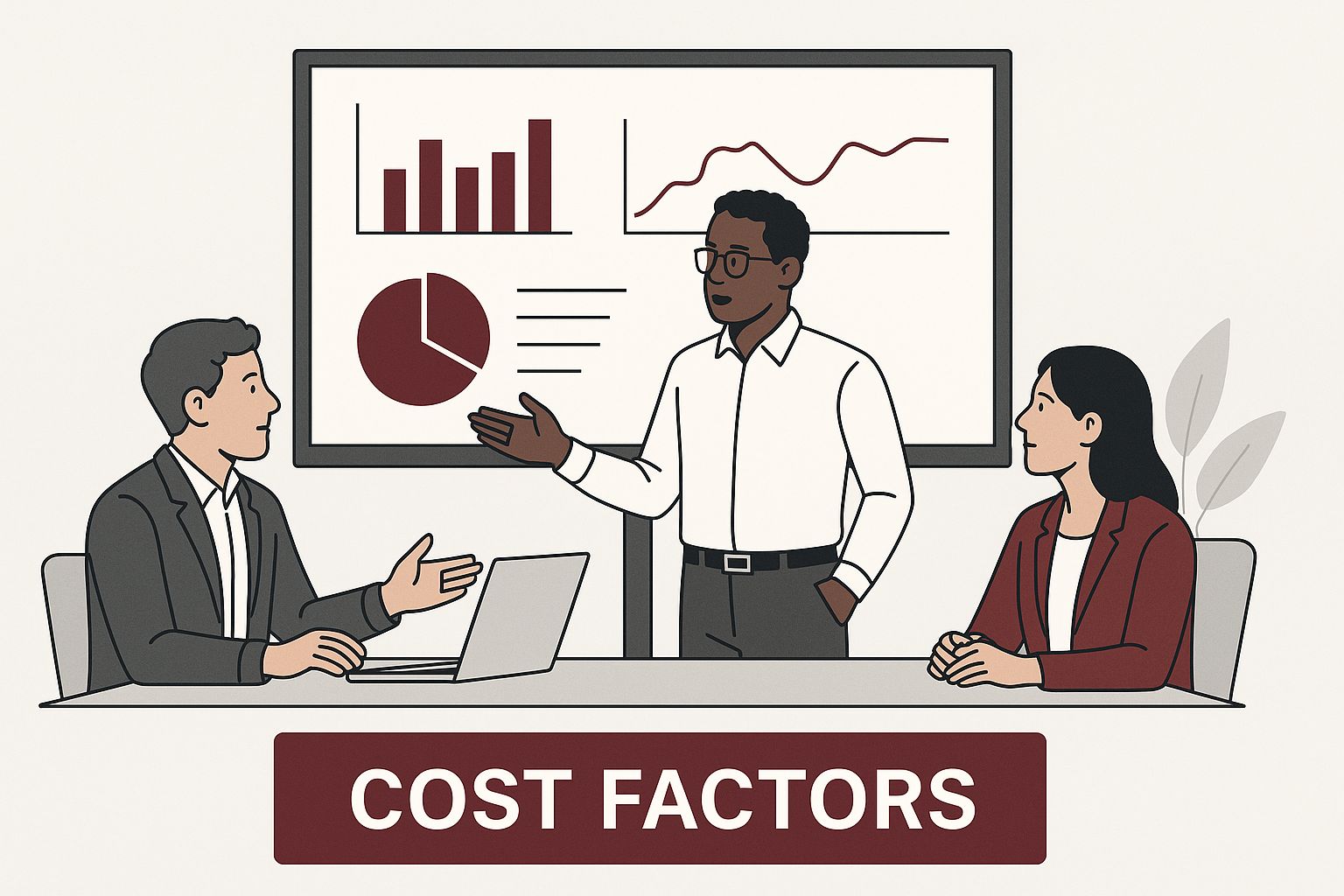
As you can see, the whole budget rests on a foundation of your team's effort, gets a major boost from external expertise, and is topped off with the official certification fees.
Pillar 1: Your Internal Resources
The first, and frankly, the most commonly underestimated pillar is the time your own team invests. You won't get an invoice for this, but believe me, it’s a very real cost. It pulls people away from their day-to-day work and impacts productivity. Think of it as the 'sweat equity' of your certification project.
These are the hours your staff will spend on essential, non-negotiable tasks demanded by the standard. This 'soft cost' can be massive, so you absolutely have to factor it into your financial planning.
So, what will your team actually be doing?
- Project Management: Someone on the inside has to own this. They'll be the one coordinating tasks, chasing people up, and keeping the whole thing on track. This can easily become a huge time-sink for an IT Manager or a Compliance Officer.
- Risk Assessments: This is a big one. Your team needs to dig deep to identify, analyse, and evaluate information security risks right across the business. It’s a meticulous process, and it takes time to do it right.
- Writing Policies and Procedures: Even if you start with templates, every policy has to be tailored to how your organisation actually works. This means getting input from different departments and turning it into clear, practical documentation.
- Staff Training and Awareness: You can’t just write policies and hope for the best. You need to develop and run training sessions to make sure every single employee understands their security responsibilities.
Forgetting to account for these internal hours is one of the biggest budgeting mistakes I see. The time commitment is significant, and it has a direct impact on how long the project takes and whether it succeeds.
Pillar 2: External Expertise
The second pillar is your investment in outside help, which usually means bringing in an ISO 27001 consultant. It might seem tempting to try and save cash by doing it all yourself, but hiring an expert is often the smartest move you can make for efficiency and peace of mind.
A good consultant is your guide and your accelerator. They’ve walked this path dozens, if not hundreds, of times. They know exactly where the traps are and can steer you around the common mistakes that waste time and money.
A consultant’s job isn't just to tell you what to do; it’s to make sure you are genuinely ready for the audit. This massively reduces the risk of a costly failure and having to pay for a follow-up audit.
Their fees will typically cover a whole range of services designed to get you to the finish line faster and with less stress.
What a Consultant's Fee Usually Covers:
- Gap Analysis: This is the starting point. An expert assesses where you are now against the ISO 27001 standard and gives you a clear, prioritised roadmap of everything that needs to be done.
- Implementation Guidance: This is hands-on support. They'll help you develop the right policies, implement the necessary security controls, and document your ISMS in a way that auditors will understand and accept.
- Pre-Audit Assessment: Think of this as a dress rehearsal. A 'mock audit' simulates the real thing, letting you find and fix any last-minute weaknesses before the official auditors walk through the door. This step is invaluable for building confidence and ensuring you pass the first time.
This expertise isn't just a line item in your budget; it's a strategic investment to de-risk the entire project.
Pillar 3: Certification Body Fees
The third and most straightforward pillar is what you pay directly to an accredited certification body. This is the fee for the formal, two-stage audit process that, if all goes well, ends with you receiving your shiny new ISO 27001 certificate.
These are the hard costs you'll see on a final invoice. The price isn't just plucked out of thin air; it’s carefully calculated based on a few key factors that determine how much work the auditors need to do.
The final audit fee is heavily influenced by:
- The Scope of Your ISMS: It's going to be cheaper to certify a single product line than it is to certify your entire global operation. A smaller scope means a smaller audit.
- Company Size: The number of employees is one of the main metrics they use to calculate the required 'auditor-days'. More people generally means more to audit.
- Number of Locations: Auditing one office is simpler than auditing five. Each physical site included in your scope adds complexity and time to the process.
- Operational Complexity: A business with a simple IT setup will face a lower audit fee than a company with complex, multi-cloud environments or intricate global supply chains.
By carefully breaking down these three pillars—Internal Resources, External Expertise, and Certification Body Fees—you can go from a vague guess to a well-structured, realistic budget. This approach puts you in control, helping you plan effectively and avoid the kind of financial shocks that can derail an otherwise successful certification journey.
Unpacking the External Audit and Certification Fees
Think of the formal external audit as the final exam for your ISO 27001 journey. And just like a big exam, it comes with a significant price tag. This fee is one of the most substantial direct costs you'll face, so getting your head around what you're actually paying for is key to budgeting properly and moving forward with confidence.
This isn't just a quick once-over. The audit is a comprehensive, two-part evaluation designed to put your Information Security Management System (ISMS) through its paces. It's a bit like getting a building inspection before you buy a house. The first visit is a structural review of the blueprints (your documentation), while the second is a hands-on inspection of the finished building (your real-world security controls).
Certification bodies calculate their fees using a metric called "auditor-days". This is the core unit of effort that drives your total audit cost, and it's determined by a few key factors unique to your organisation.
Understanding the Two-Stage Audit Process
The audit isn't a one-and-done deal. It’s a structured process split into two distinct stages, each with a clear purpose. You have to pass both to get certified, so knowing what to expect is crucial for managing your timeline and avoiding any nasty surprises.
The Stage 1 audit is basically a readiness review. An auditor will pour over your ISMS documentation—your policies, procedures, risk assessments, and the all-important Statement of Applicability. They're checking to see if you've designed a system that, at least on paper, ticks all the boxes required by the ISO 27001 standard.
Then comes the Stage 2 audit, which is where the rubber really meets the road. This is a much deeper dive where the auditors verify that your ISMS isn't just a folder of nice-looking documents, but is actually alive and kicking within your daily operations. They’ll chat with your staff, watch processes in action, and review records to find evidence that your security controls are working as they should.
The two-stage approach is designed to stop you from failing at the final hurdle. Stage 1 acts as a critical checkpoint, giving you a chance to fix any foundational gaps in your documentation before you invest in the more expensive, full-scale Stage 2 assessment.
What Determines the Number of Auditor-Days?
So, how does a certification body work out how many "auditor-days" you need? It all comes down to a calculation based on risk and complexity. A small software company with 40 people in a single office is a very different beast to audit than a multi-site logistics firm with a complex supply chain.
Several key variables have a direct impact on this calculation:
- Employee Count: This is usually the starting point. More people often mean more processes, more systems, and more potential security risks to check.
- ISMS Scope: A tightly defined scope covering just one product team will need far fewer auditor-days than one that covers the entire organisation across multiple departments.
- Operational Complexity: Are you running a simple, cloud-native IT environment or a complicated hybrid setup with decades-old legacy systems? The more complex your operations, the more time an auditor needs.
- Number of Physical Locations: Every site included in your scope adds to the audit time, especially if it involves travel and separate on-site assessments.
These factors all get blended together to create a unique risk profile for your business, which the certification body then uses to give you a specific quote for your audit.
What Are Typical Audit Costs in Australia?
While the final number will always depend on the factors we just covered, it helps to have a realistic ballpark figure in mind. For most Australian businesses, this formal audit phase is a major slice of the total ISO 27001 certification costs.
Based on recent industry data, the ISO 27001 certification audit process in Australia typically lands somewhere between AUD 15,000 to AUD 27,000 for small to medium-sized businesses. That figure covers both Stage 1 (the documentation review) and Stage 2 (the full on-site evaluation).
This price range covers the complete two-stage assessment from an accredited body and is a direct cost you should have clearly itemised in your project budget right from the start.
How to Get the Best Value from Your Audit
The audit fee is a necessary investment, but that doesn't mean you can't be smart about it. A smooth, efficient audit not only saves you from the potential cost of follow-up visits but also gives you much deeper insights into your security posture.
The key is meticulous preparation. An organised, well-documented ISMS makes the auditor's job easier, which means it goes faster. Have all your evidence ready to go and make sure your team knows what to expect when the auditors want to chat.
It’s also a very good idea to shop around. Engage with several accredited certification bodies to compare their approach, industry experience, and pricing. While cost is a big factor, you also want to find a partner who understands your business. To make this step easier, you can get three ISO certification quotes from reputable bodies to find the best fit for your company. This ensures you’re not just getting a fair price, but a thorough and valuable audit from a partner you can trust.
The True Cost of DIY Versus Hiring a Consultant
One of the first, and biggest, decisions you'll face on your ISO 27001 journey is how to actually get the work done. Do you go it alone and manage the project internally, or do you bring in an experienced consultant? At first glance, the Do-It-Yourself (DIY) path seems like the smart way to control your ISO 27001 certification costs. But honestly, that’s often a dangerous illusion.
The real costs are the ones you don't see on an invoice—they're buried in your team's diverted hours, the painfully steep learning curve, and the ever-present risk of getting it all wrong.
It's the classic "pay now or pay a lot more later" situation. A consultant's fee is a clear, upfront cost, but what you're really buying is efficiency, expertise, and a much smoother path to the finish line. Think of it like a complex legal matter; you could represent yourself in court, but hiring a lawyer saves you time, minimises your risk, and dramatically improves your chances of a good outcome.
Let's break down what both approaches really cost your business.

The Hidden Costs of the DIY Approach
Going it alone looks cheaper because there's no big consultant's bill to pay. The problem is, those costs don't just disappear. They simply shift from a direct expense into indirect "soft costs" that can absolutely cripple your team's productivity and delay your certification by months, if not longer.
The single biggest cost here is staff time. Your team members, who already have demanding full-time jobs, are now expected to become ISO 27001 experts overnight. We're not talking about an hour here or there; it’s a massive time sink learning the standard, writing policies, conducting risk assessments, and trying to keep the whole project on track.
Every hour your IT Manager spends puzzling over Annex A is an hour they aren't spending on critical infrastructure projects. That diverted focus is a very real cost to the business.
Navigating the Steep Learning Curve
ISO 27001 isn't a simple checklist you can just tick off. It's a complex, formal management framework. Without someone who's done it before, your team will burn hundreds of hours just getting their heads around the nuances of the standard.
- Misinterpreting Requirements: The standard uses very precise and formal language. A slight misunderstanding of a single clause can lead to you putting the wrong controls in place or creating documentation that just isn't compliant.
- Reinventing the Wheel: Your team will be forced to create every single policy, procedure, and form from scratch. This is a monumental drain on time compared to starting with proven, auditor-approved templates.
- Project Delays: The learning process itself gums up the works. A task an experienced consultant could knock over in a week might take an internal team a month or more to figure out and complete.
The biggest risk with the DIY approach? A failed audit. There's nothing more demoralising than getting to the final hurdle only to find out your interpretation of the standard was wrong. It’s a costly setback that forces you to pay for re-audits and rework months of effort.
The Value of Investing in a Consultant
Hiring an ISO 27001 consultant completely flips this equation. You're swapping a predictable fee for a huge injection of efficiency, expertise, and peace of mind. A good consultant is your project accelerator and your quality assurance expert, all rolled into one.
Their number one value is speed. They’ve been through this process countless times and bring a proven methodology to the table. They know exactly what auditors are looking for and how to build an Information Security Management System (ISMS) that is not only compliant but also practical for your specific business.
This expertise takes all the guesswork out of the equation, letting your team stay focused on what they do best.
Immediate Access to Proven Resources
A huge part of a consultant's value is the ready-made toolkit they bring with them. Instead of staring at a blank page, you get immediate access to a library of resources designed to get you certified, fast.
Key benefits include:
- Expert Guidance: You have someone on speed dial who can answer your specific questions and give you advice tailored to your unique challenges.
- Proven Templates: Consultants provide a full suite of customisable documents—from high-level policies to detailed procedural forms—saving you hundreds of hours of writing. If you want a head start, you can find helpful resources like these fixed-price ISO 27001 documents to get the ball rolling.
- Objective Perspective: An external expert brings a fresh pair of eyes. They can spot risks and gaps in your processes that your internal team might miss simply because they're too close to the day-to-day operations.
Ultimately, the decision comes down to a simple calculation: risk versus investment. The DIY approach is loaded with the risk of blown timelines, wasted internal resources, and potential audit failure. While a consultant's fee is a direct cost, it’s a strategic investment that buys you a faster, smoother, and more certain path to certification.
Budgeting for Long-Term Compliance and Maintenance
Earning your ISO 27001 certificate is a massive achievement, but let's be clear: it isn't the finish line. In reality, it’s the starting pistol for a continuous cycle of security improvement. The real, lasting value of ISO 27001 comes from weaving it into your company's DNA, and that requires a long-term commitment with its own set of ongoing costs.
Forgetting to budget for maintenance is a bit like buying a high-performance car and never factoring in the cost of fuel, insurance, or servicing. It just doesn't work. To keep your certification valid and your security posture genuinely strong, you need a clear financial roadmap for the years ahead. This is how you ensure that initial investment continues to pay dividends.
The ongoing ISO 27001 certification costs aren’t just about passing audits; they're about sustaining a robust security program that protects your business day in, day out.
The Mandatory Annual Surveillance Audits
Once you're certified, you officially enter a three-year cycle. To keep that certificate active, you’ll need to pass annual surveillance audits in year one and year two. These aren't as exhaustive as the initial deep-dive audit, but they are far from a simple check-in.
Think of a surveillance audit as a regular health check-up for your Information Security Management System (ISMS). An external auditor from your certification body will visit to make sure your system is still ticking along effectively, that you're actually following your own policies, and that you're committed to getting better over time.
The auditor will typically zero in on a few key areas:
- Key ISMS Processes: They'll want to see recent evidence of internal audits, management reviews, and updated risk assessments.
- Corrective Actions: Did you have any non-conformities from your last audit? They'll be checking to see that you've properly fixed them.
- Continual Improvement: They are actively looking for proof that your ISMS isn’t static—that it's evolving to handle new threats and business changes.
Because these audits are smaller in scope, they cost less than the initial certification. For a small to medium-sized Australian business, you can expect a surveillance audit to cost between $5,000 and $10,000 each year. This is a non-negotiable expense you absolutely have to plan for.
The Three-Year Recertification Audit
At the end of your three-year cycle, your certificate expires. To renew it, you have to go through a full recertification audit. This is a much more comprehensive review, similar in scope and intensity to your original Stage 2 audit—it’s a complete, top-to-bottom re-evaluation of your entire ISMS.
The recertification audit is all about confirming that your security practices are still fully compliant with the ISO 27001 standard after three years in the wild. Since it's such a deep dive, its cost is comparable to your initial certification audit, so you need to budget for this major expense every third year.
The three-year cycle of surveillance and recertification audits is the mechanism that ensures ISO 27001 isn't just a "set and forget" certificate. It forces a culture of constant vigilance and improvement, which is where the real security value lies.
Ongoing Internal Resource and Tooling Costs
Beyond the formal audits, a whole host of other recurring expenses are essential for keeping your ISMS alive and kicking. These ongoing operational costs are a vital, and often overlooked, part of your long-term security budget.
Internal Staff Time
Your ISMS doesn't run itself. Someone has to do the work! Maintaining compliance requires dedicated time from your team for activities like:
- Conducting scheduled internal audits.
- Holding regular ISMS management review meetings.
- Updating risk assessments when new threats pop up.
- Managing and investigating security incidents.
- Reviewing and refreshing policies and procedures.
This ongoing "soft cost" in staff hours is a significant and continuous part of keeping your certification.
Employee Security Training
Security awareness isn’t a one-and-done event. To keep security top-of-mind, you need to provide regular, ongoing training for all staff and get new starters up to speed as they join. This could mean subscription costs for online training platforms or the internal cost of your team developing and delivering the training themselves.
Essential Security Tool Subscriptions
A modern ISMS almost always relies on technology to work effectively, and these tools usually come with annual subscription fees. To streamline your security obligations and manage these costs, exploring some of the top compliance software solutions can be a really smart move.
Common subscription-based tools include:
- Vulnerability Scanners: To proactively hunt for weaknesses in your systems.
- SIEM Platforms: For Security Information and Event Management, helping you spot and respond to threats in real-time.
- Compliance Automation Software: Platforms that take the pain out of managing evidence, updating policies, and preparing for audits.
- Endpoint Protection: Advanced antivirus and malware protection for all your company devices.
By mapping out all these recurring expenses—audits, internal time, training, and tools—you create a financial plan that's actually sustainable. This forward-thinking approach ensures your organisation not only hangs onto its ISO 27001 certificate but also continuously strengthens its defences against a threat landscape that never stands still.
Calculating the Real Return on Your Security Investment
It’s easy to look at ISO 27001 certification and see it as just another expense on the books. Honestly, that’s a mistake. It completely misses the point.
Think of it instead as a strategic investment in the future of your company—one that pays real, measurable dividends. The benefits you’ll get aren’t just about having a certificate to hang on the wall. We’re talking about tangible gains that hit your bottom line and priceless advantages that build a rock-solid, trusted brand.
When you start thinking "investment" instead of "cost," the true value of getting your information security in order becomes incredibly clear.
The Tangible ROI of ISO 27001
The most obvious returns are the ones you can track in your accounting software. These are the hard-and-fast financial wins that justify the whole project. The ISO 27001 certification costs you pay upfront are often dwarfed by the new opportunities and avoided disasters that follow.
A big one right off the bat is winning new business. These days, big corporate clients and government departments don't just prefer suppliers with ISO 27001; they often demand it. Certification gets you a seat at tables you couldn't even approach before, turning a security project into a genuine revenue driver.
Then there’s the massive benefit of risk mitigation. Let’s be blunt: the average cost of a data breach in Australia can be absolutely catastrophic, often climbing into the millions. Your ISMS acts as a powerful shield, dramatically lowering the chances of a breach and helping you dodge the crippling regulatory fines, legal bills, and brand damage that come with it.
Think of it this way: the investment in ISO 27001 is a tiny fraction of the potential cost of a single major security incident. It’s proactive protection that secures your finances just as much as it secures your data.
On top of that, certification can lead to direct operational savings. Many cyber insurance providers see ISO 27001 as the gold standard for managing risk. Because of this, certified organisations can often secure lower insurance premiums, turning a compliance effort into a recurring annual saving.
The Intangible Benefits That Drive Long-Term Value
Beyond the black and white of the balance sheet, the other returns are just as powerful—maybe even more so. These are the benefits that strengthen your organisation from its very core, building a culture and reputation that become a serious competitive edge.

First and foremost, you build unbreakable customer trust. We live in an age where data breaches are constantly in the news. Being able to prove your commitment to security isn't just nice—it's a massive differentiator. Customers will feel safer giving you their information, which leads to better loyalty and a stronger reputation.
Internally, the whole process cultivates a security-first culture. ISO 27001 makes security everyone's job, not just a problem for the IT department to solve. This creates a more vigilant workforce—a human firewall that is often your best defence against threats like phishing attacks.
The standard also helps you streamline your operations. The exercise of mapping out your processes and defining who does what almost always uncovers clunky, inefficient ways of working. By standardising your approach, you end up with a more organised, efficient, and scalable business. We dive much deeper into this journey in our guide on the ROI of cyber security.
When you look past the initial invoices and start adding up these tangible and intangible returns, the business case becomes undeniable. ISO 27001 isn't a cost centre; it's an investment that powers long-term protection, unlocks new growth, and builds lasting resilience for your business.
Your ISO 27001 Cost Questions Answered
Even after laying out all the numbers, it's completely normal to have questions swirling around. Getting your head around the investment for ISO 27001 certification is a big deal, and you need straight answers to budget properly and move forward with confidence.
Let's dive into some of the most common questions we get from businesses on this journey. We’ll cut through the jargon and give you the practical insights you need.
How Long Will the ISO 27001 Certification Process Actually Take?
This is the classic "how long is a piece of string?" question. There's no one-size-fits-all timeline because every business is different. The speed of your journey really boils down to three things: your company’s size, how complex your operations are, and where your security posture is right now.
For a typical Aussie small or medium-sized business that already has some decent security practices in place, you’re generally looking at a 6 to 12-month timeframe. That’s a realistic window from the day you kick things off to the day you’re holding that certificate.
That period covers all the essential groundwork for building a solid Information Security Management System (ISMS), including:
- Mapping out all your risks and figuring out how to handle them.
- Writing and rolling out all the necessary policies and procedures.
- Putting the required security controls in place across the business.
- Running your own internal audits to make sure everything is working.
- Facing the official two-stage external audit with a proper certification body.
If you're starting from scratch with your security or have a particularly complex setup, it's wise to plan for a longer timeline. This just makes getting your initial planning right even more important.
Can We Really Get Certified Without an External Consultant?
Look, this is probably the biggest fork in the road you'll face, and it has a massive impact on both your budget and your odds of success. While you technically can go it alone, we've seen enough to know it's a high-risk gamble that we’d strongly advise against.
Trying to DIY this puts a huge amount of pressure on your internal team. They’d need to become genuine experts on the ISO 27001 standard, have killer project management skills, and carve out a massive chunk of time from their day jobs. It's a huge ask.
The real danger is misinterpreting the standard, making a critical mistake in your implementation, or flat-out failing the audit. For most businesses, a consultant's fee isn't an expense; it's an investment in getting it right the first time.
An experienced consultant gives you a proven playbook. They stop you from making expensive mistakes and make sure you’re truly ready for the intense scrutiny of the external audit. This dramatically boosts your chances of passing on the first attempt, saving you the stress, time, and money of having to do it all over again.
Are There Any Government Grants in Australia to Help with the Costs?
It's a great question, and everyone's looking for ways to manage the ISO 27001 certification costs. Unfortunately, you're unlikely to find a government grant specifically labelled "for ISO 27001 certification." They just aren't that common.
But don't lose hope just yet. You might find some financial help through broader government programs. Think about federal and state initiatives designed to boost cybersecurity skills, get businesses ready for export, or encourage tech adoption.
Your business could tap into a program that helps cover some of the related expenses. For instance, a grant focused on cyber resilience might help pay for new security software or fund staff training—both of which are core parts of the ISO 27001 process.
It’s worth your time to check out what’s on offer from government bodies like Austrade or your state's business development agency. Read the eligibility criteria carefully. You might just find a grant that aligns perfectly with your security goals and helps take the sting out of the overall investment.
Navigating the path to ISO 27001 certification can feel complex, but you don't have to do it alone. At Anitech, we specialise in guiding Australian businesses through every step of the process with a 100% success rate. Let our 20 years of experience simplify your journey to compliance. Start your ISO 27001 journey with our experts
Recent Comments