

Quick Summary: The ISO 27001 certification price for a small Australian business typically ranges from $12,000 to $25,000 in the first year. This guide breaks down the key costs, including consulting, external audits, and ongoing maintenance, and explains how factors like company size and security maturity impact the final investment.
So, you're wondering what it really costs to get ISO 27001 certified in Australia. Let's get straight to the point. For most small businesses, the first-year ISO 27001 certification price is an investment of between $12,000 and $25,000.
This guide is here to break down that number for you. We'll pull back the curtain on every single cost component, from getting your own house in order to paying for the final audits. Think of this as your financial roadmap to certification, so you can see exactly where every dollar goes.
We'll explore how things like your company's size, the complexity of your operations, and your current security setup can push that final number up or down. More importantly, we'll help you see this not as just another business expense, but as a crucial investment in your company's security, reputation, and future growth.
Understanding Your Investment: The Cost of ISO 27001 Certification
Getting ISO 27001 certified isn't just about ticking a compliance box. It’s a deliberate, strategic move to build a rock-solid defence against the very real and ever-present threats in the digital world. The cost of ISO 27001 certification isn't a single invoice; it's a series of targeted investments in your people, your processes, and the technology that holds it all together.
Think of it like building a secure vault. You wouldn't just pay for the final inspection and hope for the best. You'd invest in architects to design it, high-quality steel for the walls, and skilled engineers to build it properly. That's what ISO 27001 is for your data—a structured, methodical way to ensure it's secure from the ground up.
This guide will demystify the numbers so you can budget with confidence and make sure you’re getting the best possible return on that investment.
The Initial Financial Commitment
For a typical small Australian business (we're talking fewer than 25 employees), that first-year cost for ISO 27001 certification generally lands somewhere between AUD $12,000 and AUD $25,000. Given the rising tide of cyber threats, this is a pretty accessible investment for seriously upgrading your security posture.
So, what makes up that figure? Here's a quick look at the main cost categories you'll encounter.
Estimated First-Year ISO 27001 Certification Costs for a Small Business
This table provides a summary of the typical cost ranges for the primary components of achieving ISO 27001 certification in Australia.
| Cost Component | Typical Price Range (AUD) |
|---|---|
| Consulting & Advisory Fees | $6,000 – $12,000 |
| External Audit Fees (Stage 1 & 2) | $4,000 – $8,000 |
| Technology & Tools (Optional) | $1,000 – $3,000+ |
| Total Estimated First-Year Cost | $12,000 – $25,000 |
These numbers give you a solid baseline, but it's important to understand what's behind them.
The primary expenses you'll be looking at include:
- Consulting and Advisory Fees: This is for expert help to guide you through the maze. A good consultant will run a gap analysis, help you develop the necessary documentation, and make sure you're actually ready for the audit.
- Internal Resource Allocation: Don't forget the cost of your own team's time! They'll be busy implementing new controls, getting trained, and taking part in the audit itself.
- External Audit Costs: These are the non-negotiable fees you pay to an accredited certification body to conduct the mandatory Stage 1 and Stage 2 audits.
- Technology and Tools: You might need to invest in new software or systems to help manage your Information Security Management System (ISMS) effectively.
Viewing certification as a proactive investment rather than a reactive expense shifts the focus from a simple price tag to the long-term value of resilience, customer trust, and competitive advantage.
Getting a handle on these components is the first step to building a realistic budget. As we go deeper, we'll unpack each cost, look at the factors that can change the price, and give you practical tips to manage your spend without cutting corners on security.
To get the full picture of the entire journey, have a look at our definitive guide to ISO 27001 certification in Australia.
Deconstructing the Core Costs of Certification
So, what does it really cost to get ISO 27001 certified? To understand the price tag, it helps to see the journey in two distinct phases: getting your own house in order first, and then having an external expert come and inspect it. Breaking it down this way makes budgeting a whole lot easier and shows you exactly where your money is going.
The first part of the process is all about internal preparation. This is where you lay the groundwork and build your Information Security Management System (ISMS). Honestly, this is often the heaviest lift.
Once that's done, you move on to the formal audit, where an independent body verifies that your shiny new system actually meets the ISO 27001 standard. Let’s pull back the curtain on the specific costs you can expect at each stage.
The Internal Preparation Phase
Think of this as building the engine before you get it road-tested. This phase involves a series of critical tasks to get your organisation aligned with the standard’s requirements. The main costs here are a blend of expert help and your own team's time.
- Gap Analysis: The first, most crucial step. It’s a deep dive into your current security setup, comparing it against the ISO 27001 checklist. This analysis uncovers what’s missing, from policies to controls, and gives you a clear project roadmap. For most small businesses, a professional gap analysis will land somewhere between $2,000 and $5,000.
- Risk Assessment & Treatment: This is the heart of your ISMS. You'll work to identify the real-world threats to your company's information and then create a solid plan to manage those risks. It’s a hands-on process that requires careful thought and input from your key people.
- Documentation & Policy Development: ISO 27001 loves good documentation. You’ll need to create a whole suite of policies covering everything from access control to how you handle a security incident. Starting from scratch is a huge task, and getting expert input here is a smart move to make sure your policies are both practical and compliant.
- Staff Training & Awareness: Security is a team sport. Every single person in your company needs to understand their role in protecting information. This cost covers creating training materials and running sessions to foster a genuine culture of security awareness.
Bringing in an experienced consultant during this phase is less of a cost and more of an investment. They’ll help you sidestep common pitfalls, speed up the paperwork, and build a system that doesn't just tick a box but actually works for your business. For a more detailed breakdown of these early-stage expenses, have a look at our comprehensive guide to ISO 27001 accreditation cost.
The External Audit Phase
Once you’ve done the internal work, it’s time to call in the professionals. You'll engage an accredited certification body to conduct the formal audit, which is split into two stages. The fees here cover the auditor's time and expertise for both parts of the process.
- Stage 1 Audit (Documentation Review): In this first audit, the external auditor pores over all your ISMS documentation. They’re basically checking your homework on paper, making sure you’ve interpreted the standard correctly and have all the necessary policies and procedures in place before they come on-site.
- Stage 2 Audit (Implementation Audit): After you pass Stage 1, the auditor returns for the main event. Now, they’re here to see your ISMS in action. They’ll interview your staff, check records, and observe your processes to confirm your security controls are fully implemented and working as they should be.
For a small Australian business, the combined cost for these external audits typically falls in the $4,000 to $8,000 range. This fee goes directly to the certification body you hire.
The two-stage audit process is designed to eliminate surprises. Stage 1 confirms you have the right map, and Stage 2 confirms you've actually followed it to your destination.
Ongoing Financial Commitments
Getting certified isn't a "one and done" deal. It marks the beginning of a continuous improvement cycle, and with it come some ongoing costs to keep your certification and your security sharp.
- Annual Surveillance Audits: For the next two years, you’ll have an annual check-up audit. These are lighter than the initial big audit, but they’re essential for verifying that you’re maintaining your ISMS and continuing to improve.
- Recertification Audit: Your ISO 27001 certificate is valid for three years. When it expires, you’ll go through a full recertification audit, which is pretty similar in scope and cost to your original Stage 2 audit.
- Continuous Improvement Activities: Beyond the audits, you need to keep your defences strong. Activities like regular penetration testing are crucial for staying ahead of new threats and are a key part of the recurring costs of maintaining a truly effective security program.
What Really Drives the Final Price Tag?
Pinning down an exact cost for ISO 27001 certification is tricky because it’s not a one-size-fits-all product. Think of it like building a house – the final price depends on whether you're building a studio apartment or a sprawling mansion. The investment your business needs to make is shaped entirely by your specific situation.
Getting a handle on these factors is the key to managing your budget. It allows you to create a realistic forecast, spot opportunities for savings, and go into discussions with consultants and certifiers with your eyes wide open. Let’s break down the main things that will influence your final invoice.
Your Company Size and Employee Count
This is the most straightforward factor. The bigger your team, the higher the cost. Certification bodies often calculate their audit fees based on your number of full-time employees (FTEs). Why? Because more people mean more potential security weak points, more devices to check, and more interviews to conduct during the audit.
But it’s not just about the audit fees. A larger company needs a more comprehensive training program to get everyone up to speed on their security duties. The time, effort, and resources required to roll out new security controls and procedures also grow right alongside your headcount.
The Complexity of Your ISMS Scope
The "scope" of your Information Security Management System (ISMS) is another huge piece of the puzzle. Your scope simply defines which parts of your business the certification will cover. You might decide to certify just one critical department or a specific product line, which will be far cheaper than certifying the entire organisation from top to bottom.
Several things can make your scope more complex and, therefore, more expensive:
- Multiple Office Locations: If your ISMS needs to cover several physical sites, auditors will need more time on the ground. This often means travel expenses and longer audit days, which adds to the overall cost.
- Hybrid or Remote Work Models: A distributed workforce brings its own set of security headaches. You’ll need to address everything from secure home Wi-Fi policies to managing company laptops off-site, and all of this needs to be audited.
- Technical Infrastructure: A business running on simple, modern cloud services will have a much easier (and cheaper) time than a company with complex, custom-built legacy systems, multiple data centres, and tangled network setups.
One of the smartest ways to control your initial costs is to define a clear, tight, and manageable scope. You can always expand it later once you’ve got the hang of things and your security program is more mature.
Your Current Security Maturity Level
This is a big one: where are you starting from? If your organisation already has solid security controls and well-documented policies, you’ve got a massive head start. If you’re building your entire security program from scratch, expect a much bigger upfront investment.
It helps to think of it like a kitchen renovation. Are you just updating the benchtops, or are you tearing it down to the studs and starting over?
- Low Maturity (Building from Scratch): You'll be spending a lot of time and money in the preparation phase. This means creating all your policies from the ground up, conducting your very first comprehensive risk assessment, and implementing a whole host of new security tools and procedures.
- Medium Maturity (Some Controls Exist): You might already have things like an incident response plan or a process for vetting new suppliers. Here, the job is about dusting off what you have, aligning it with the ISO 27001 standard, and filling in the inevitable gaps.
- High Maturity (Existing Frameworks): If you’re already compliant with another security framework like SOC 2, you’re in a great position. A lot of that work can be repurposed, which dramatically cuts down the time and effort needed to get ready for your ISO 27001 audit.
Your Choice of Certification Body
The final variable is the certification body you hire to conduct the official audits. These are the accredited organisations that have the authority to grant you an ISO 27001 certificate. While they all do the same job, their prices and approaches can differ significantly.
It’s always a good idea to get quotes from a few different accredited certifiers. Their fees are influenced by their reputation, the experience of their auditors, and where they’re located. Some might bill you for travel, while others may offer a package deal for the full three-year certification cycle.
Don't just jump at the cheapest quote. An auditor with real experience in your industry can provide a much smoother, more valuable audit. Taking the time to weigh these options will give you a much clearer picture of your costs and help you avoid any nasty surprises on your path to certification.
What Does This Actually Cost? Realistic Budgets for Small Businesses
Let's move away from theory and talk real numbers. Understanding the line items is one thing, but seeing how they come together for an actual Australian small business makes everything click. It helps you see where your own company might fit in.
To paint a clear picture, we’ll walk through two very different scenarios. First, a tech startup that’s basically starting from zero on formal security. Second, a more established services firm that already has some good habits in place. This comparison really shows how your starting point dramatically influences the final bill.
Scenario A: The 15-Person Tech Startup
Picture a fast-growing tech startup in Sydney with 15 staff. They’re juggling sensitive client data, but their security is more of an informal "we'll figure it out" culture than a documented system. The big driver for them is landing a major corporate client who is demanding ISO 27001 certification.
Because they're at the very beginning of their security journey, their initial investment is going to be higher. They need a lot of hands-on help to define the scope of their ISMS, conduct a proper risk assessment, and write all the necessary policies from the ground up. Their cost reflects all this foundational work.
Scenario B: The 25-Person Services Firm
Now, let's look at a professional services firm in Melbourne with 25 employees. They aren't starting from scratch; they already have some basic security policies, a plan for when things go wrong, and they run annual security training for their team. For them, getting certified is about formalising what they do to gain a competitive edge.
This firm’s project is more about refining and aligning what they already have, not building it from nothing. Their existing security controls give them a huge head start, which cuts down on consulting and documentation time. While their larger team size means the audit itself costs a bit more, their overall investment is lower because they’ve already done some of the legwork.
Itemised Budget Comparison
So, how do these two stories translate into dollars? This table breaks down the estimated costs and shows exactly how a different starting line affects the budget.
Sample ISO 27001 Budget Scenarios
| Expense Item | Scenario A Cost (Tech Startup) | Scenario B Cost (Services Firm) |
|---|---|---|
| Consulting & Implementation | $11,000 | $7,500 |
| Staff Training & Awareness | $1,500 | $1,000 |
| Software & Tools (Optional) | $2,000 | $1,500 |
| External Audits (Stage 1 & 2) | $5,500 | $7,000 |
| Total Estimated First-Year Cost | $20,000 | $17,000 |
It's interesting, right? Even though the services firm is bigger, their smarter starting point means they actually spend less overall. The startup pours more money into consulting to build its system, while the services firm’s main variable is the slightly higher audit fee for their larger team.
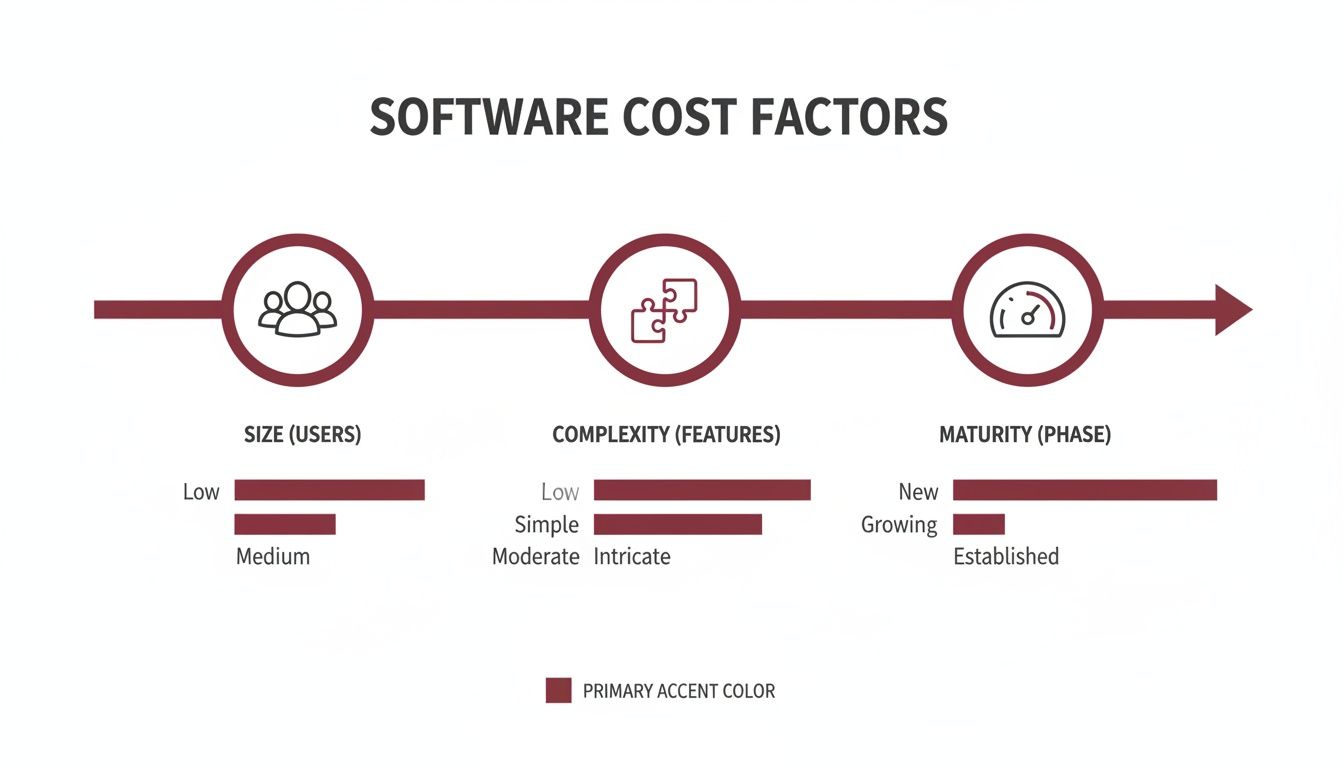
This is a perfect illustration of how your company's size, the complexity of your work, and your current security maturity all play a huge role in the final cost.
The biggest takeaway here is that any investment you make in good security practices before you even think about certification can save you a bundle later on. As you map out your own budget, thinking about how managed IT services for small business could help you get your house in order is a really smart move.
A solid budget is your best defence against the hidden expense of a failed audit. Putting the right investment in upfront with expert help means a smoother journey, and you won’t get stung with the cost of re-audits or painful project delays.
Ultimately, these examples show that good planning is everything. When you know where you stand and what you need to do, you can build a budget that makes sense and avoid any nasty surprises along the way.
How to Cut Costs Without Cutting Corners on Security
Getting your business ISO 27001 certified is a serious investment, but it doesn’t have to break the bank. With some clever planning, you can manage the ISO 27001 certification price without taking risky shortcuts on your security. It’s all about working smarter to build a compliant system that’s both strong and cost-effective.
The real trick is to focus on efficiency right from the get-go. By making smart calls on your project’s scope, using what you already have, and picking the right people to help, you can hit your certification goals without stretching your budget to its breaking point.
Nail Down a Manageable Starting Scope
One of the most powerful ways to keep costs in check is to be realistic with your scope. Don’t try to certify the entire organisation in one go. Instead, start with a smaller, clearly defined area—maybe a single critical department, a specific product, or just one office location.
A tighter scope brings down costs pretty much everywhere:
- Fewer Auditing Days: Certification bodies usually calculate their fees based on how big and complex the scope is. A smaller scope means less for them to dig through, which translates directly to lower audit fees.
- Less Implementation Work: Your team's time and energy are concentrated on a manageable set of processes and assets, which cuts down on internal hours and costs.
- Faster Wins: Getting a smaller part of the business certified is a great learning experience. It also gives you a quick victory that builds confidence and momentum for expanding later.
Think of it like a pilot project. You get to fine-tune your Information Security Management System (ISMS) on a smaller scale. Once that foundation is rock-solid, you can expand the scope in the following years.
Use the Security Controls You Already Have
Most businesses have more security measures in place than they give themselves credit for. Before you rush out to buy new software or rewrite every single policy, take a good look at what you’re currently doing. You’ll probably find you have existing procedures that already tick some of the ISO 27001 boxes.
For instance, you might already have:
- Checklists for when new employees start and when they leave.
- Processes for checking out new suppliers.
- Plans for backing up and recovering your data.
You don't need to reinvent the wheel. These existing processes can simply be tweaked, updated, and properly documented to meet the standard's requirements. This approach can save you countless hours and the unnecessary cost of starting from zero.
The Real Value of a Good Consultant
It might sound strange to suggest spending money to save money, but hiring an experienced consultant is often one of the smartest financial decisions you can make. Their expertise pays for itself by helping you avoid the common, expensive mistakes that can completely derail a certification project.
A great consultant is like a seasoned guide on a tricky mountain climb. They know the path, point out the hazards, and make sure every step you take—and every dollar you spend—gets you closer to the summit of a successful audit.
An expert simply makes the whole process smoother. They know precisely what auditors want to see, so they help you prepare the right documents and implement practical controls without wasting time. This frees up your internal team to focus on their actual jobs while the certification moves forward, ultimately bringing down the total cost of getting and staying certified.
Beyond the Price Tag: The True Value of Certification
Focusing solely on the ISO 27001 certification price is a bit like judging a house by the cost of its front door key. You miss the bigger picture entirely. Yes, there's an upfront investment, but treating certification as just another business expense is a serious strategic error.
It’s time to reframe your thinking. See it for what it really is: a powerful investment in your company's future, with a return that far outweighs the initial cost. The real value isn't the certificate you hang on the wall; it's in building a tougher, more resilient organisation ready for whatever cyber threats come its way. This isn't just about ticking a compliance box—it's about gaining a genuine competitive advantage.

Unlocking Tangible Business Benefits
The ROI from ISO 27001 shows up in some of the most critical parts of your business, turning what seems like an expense into an engine for growth. When you commit to the standard, you aren't just buying better security processes; you're investing in your company's long-term stability and reputation.
Here's where you'll see the real, long-term value kick in:
- Enhanced Data Security: This is the most obvious win. A well-implemented Information Security Management System (ISMS) dramatically lowers your risk of a data breach. Considering the staggering cost of a breach these days, preventing just a single incident can easily pay for the entire certification process, many times over.
- Increased Customer Trust: In a world where data security is front of mind for everyone, having ISO 27001 certification sends a powerful message. It tells your clients, partners, and prospects that you are serious about protecting their information. That builds incredible confidence and deepens your business relationships.
- New Business Opportunities: This is a big one. Many large corporations and government departments across Australia now flat-out require ISO 27001 from their suppliers. Getting certified doesn't just get you a seat at the table; it unlocks doors to major contracts that would otherwise be completely closed to you.
Viewing the ISO 27001 certification price as a strategic investment in market access and risk mitigation is crucial. It’s the cost of entry for higher-value partnerships and a proven defence against catastrophic financial and reputational loss.
Creating a Competitive Edge
Beyond just opening doors, certification genuinely sets you apart from your competitors. It becomes a clear point of difference in the market, proving a level of security maturity that others simply can't claim. This doesn't just help you win new clients; it also makes your existing ones stick around. After all, why would a customer leave a partner they implicitly trust with their sensitive data?
On top of that, the certification journey itself forces you to become a more efficient organisation. You'll streamline processes, clarify everyone's roles and responsibilities, and get rid of redundant tasks. It’s a disciplined approach that fosters a strong security culture from the ground up, turning your entire team into your best defence.
Ultimately, the true value of ISO 27001 is its power to build a stronger, more trusted, and more competitive business poised for sustainable growth.
Your ISO 27001 Pricing Questions, Answered
Getting your head around the investment for ISO 27001 certification can feel a bit murky. Let's clear things up by tackling some of the most common questions business owners ask about the real-world costs.
Are There Any Hidden Costs I Should Watch Out For?
Absolutely, and this is where many businesses get caught out. The initial quote is just one part of the picture. You also need to factor in potential costs that aren't always obvious from the get-go.
Think about things like re-audit fees if you don't pass the first time around, ongoing subscription costs for any new security software you bring on board, and—perhaps the biggest one—the sheer amount of your team's time spent keeping the system running.
A good consultant's job is to shine a light on these potential expenses right from the start. They’ll help you build a realistic budget that accounts for everything, so there are no nasty surprises down the track.
Can We Just Do This Ourselves Without a Consultant?
Look, it's technically possible, but I've seen it go wrong too many times. Going it alone often ends up being a classic case of "penny wise, pound foolish." The risk of misinterpreting the standard, creating documentation that doesn't quite hit the mark, and failing the audit is significantly higher.
Bringing in an experienced consultant is more than just paying for advice; it’s an investment in getting it right the first time. They give you a proven roadmap, steer you away from expensive mistakes, and free up your team to focus on what they do best. In the end, their fee often pays for itself in saved time and avoided headaches.
What Costs Can We Expect After the First Year?
This is a crucial point: ISO 27001 isn't a "set and forget" project. To keep that valuable certificate on your wall, you need to budget for ongoing maintenance and audits.
Here’s the typical cycle:
- Annual Surveillance Audits: For the two years following your initial certification, you'll have surveillance audits. These are essentially check-ins to make sure you're still on track. They’re less intense and usually cost around 50-60% of your initial Stage 2 audit fee.
- Recertification Audit: Every three years, it’s time for a full recertification audit. This is a comprehensive review, similar in scope and cost to what you did to get certified in the first place.
These aren't just administrative hurdles; they’re what ensures your security management system stays sharp, effective, and truly protects your business long-term.
Ready to get a clear and accurate quote for your ISO 27001 certification journey? The expert team at Anitech simplifies the entire process, helping you achieve compliance efficiently and cost-effectively. Contact us today to start your path to certification.
Recent Comments