

When you bring an ISO 27001 consultant on board, you’re doing more than just ticking a compliance box. You’re making a serious investment in your company’s future—one that builds resilience, fortifies your security, and earns trust.
Beyond Compliance: The Strategic Value of an ISO 27001 Consultant

In a world of constant cyber threats and ever-tightening regulations, solid information security is no longer just a defensive play. It's a powerful competitive advantage. Partnering with the right expert can turn this challenge into a genuine opportunity for growth.
A seasoned consultant does so much more than get you ready for an audit. They help weave security principles into the very fabric of your daily operations. This fosters a culture of security awareness that protects your most valuable asset: your data.
This shift in mindset is critical. Stop seeing an ISO 27001 consultant as a cost centre and start seeing them as a strategic partner. That's the first real step to unlocking their full potential. They provide the roadmap to not only achieve certification but to build a far more secure and efficient business along the way.
Unlocking New Business Opportunities
Let’s talk about one of the most immediate, tangible benefits: opening doors to new revenue. Many large corporations and government agencies now flat-out require ISO 27001 certification from their suppliers. No certificate, no contract. It's that simple.
Think about a growing software-as-a-service (SaaS) company in Melbourne looking to land a major contract with a national bank. The tender documents were crystal clear: ISO 27001 certification was non-negotiable. By hiring a consultant, they didn't just meet the requirement; they showed a proactive commitment to security that made them stand out from the crowd.
This isn't a rare scenario anymore; it's becoming the norm. Certification acts as a trusted signal to the market, instantly telling potential clients that you manage information security according to a globally recognised, best-practice framework.
An ISO 27001 certificate is more than just a piece of paper. It's a key that opens doors to enterprise-level clients and government tenders that would otherwise remain firmly shut. It elevates your brand and builds immediate trust.
Navigating a Complex Security Environment
The real strategic value of an ISO 27001 consultant is their expertise. They guide your organisation through the intricate process of how to build an IT security management system that meets tough international standards. They bring clarity to a complex journey, saving your team countless hours and preventing expensive mistakes.
And that expertise is in high demand, especially here in Australia. With rising cyber threats and stricter regulations, the need for skilled consultants has skyrocketed. The Asia-Pacific region, including Australia, already accounts for about 25% of all ISO 27001 certifications worldwide, driven by government initiatives and the big push to cloud security.
Australian ISO 27001 consultants are crucial for navigating the common hurdles. They help manage the high implementation cost, which 40% of organisations globally cite as a major barrier, and address the skill shortages that 35% of firms report.
A good consultant helps you manage these challenges head-on. They will:
- Allocate resources efficiently: By focusing on the highest-risk areas first, they ensure your security budget delivers maximum impact.
- Avoid common pitfalls: Having done this countless times, they know what auditors look for and how to sidestep the classic mistakes that can derail a certification audit.
- Bridge the skills gap: They bring specialised knowledge your internal team might not have, offering training and guidance that builds lasting capability within your organisation.
Fostering Unshakable Customer Trust
At the end of the day, information security is all about trust. Your customers and partners need to know their sensitive data is safe with you. A single data breach can do irreparable harm to your reputation, leading to lost customers and long-term financial pain.
Getting ISO 27001 certified with the help of a consultant sends a powerful message. It proves you've implemented a systematic, risk-based approach to protecting information. This isn't just a claim you're making; it's a fact verified by an independent, accredited auditor.
Just consider the difference in perception:
- Without Certification: "We take security seriously."
- With Certification: "Our commitment to security has been independently audited and certified against a global standard."
The second statement carries so much more weight. It replaces a subjective promise with objective proof, building the kind of unshakable customer trust that’s essential for sustainable growth. This partnership is your path to earning that proof.
What Kind of Consultant Do You Actually Need?
Before you even start looking for an ISO 27001 consultant, you need to figure out exactly who you’re looking for. Diving into the market without a clear brief is a recipe for disaster. You’ll get a flood of proposals, sure, but most won’t get you where you need to go. The goal here is to build a detailed picture of your ideal partner, one that attracts experts who are a genuine fit for your business.
This first step is all about looking inward. It means taking an honest look at your company’s skills, goals, and the specific security headaches you're facing. A well-defined profile doesn’t just make your search more efficient; it sets the stage for a successful partnership from the very beginning.
Take Stock of Your In-House Team
First things first: what are you already working with? Do you have a dedicated IT security team, or is security a hat worn by a few different people? Knowing your internal capacity is critical because it tells you exactly how much support you'll need from an outsider.
For instance, a company with a skilled cybersecurity analyst might just need a consultant for high-level strategy and to help them get ready for the audit. On the other hand, a small business with no dedicated security person will need someone who can get their hands dirty—from writing policies to helping implement technical controls. Be brutally honest with yourself here.
Think about these key areas:
- Technical Know-How: Does your team really get network security, access control, and encryption?
- Documentation Skills: Who is going to write all the policies and procedures your Information Security Management System (ISMS) needs? This is a huge job.
- Project Management: Do you have someone who can actually drive this project, keeping everyone on track across different departments?
A frank assessment stops you from hiring a consultant who either just duplicates skills you already have or, worse, doesn't fill the gaps you desperately need plugged.
Map Out the Boundaries of Your ISMS
Next, you need to decide what’s in and what’s out. "Everything" is almost never the right answer, especially when you're just starting out. The scope defines which parts of your business will be covered by the ISO 27001 certificate, and it's one of the first things any good consultant will ask about.
A tight, well-defined scope might cover:
- A specific product line, like your main SaaS platform.
- A particular physical location, such as your primary data centre in Sydney.
- A single business unit, like the department that handles sensitive client data.
A fintech startup, for example, might decide to scope its ISMS to only cover the systems and processes that touch customer financial data. This keeps the project manageable and puts the focus squarely where the risk is highest. As the business grows, they can always expand the scope later.
Your ISMS scope statement is a make-or-break document. It tells auditors, clients, and your consultant exactly what is—and what is not—covered by your certification. A fuzzy scope can lead to confusion, failed audits, and a lot of wasted money.
Get Clear on Your "Why"
Why are you doing this right now? The answer to that question will completely change the type of consultant you need. Different motivations call for different kinds of expertise and different ways of working.
Are you being pushed by:
- A Big Client? If you’re trying to land a specific contract that demands certification, you need a consultant who has a rock-solid track record of getting clients through audits quickly and on a tight deadline.
- The Regulators? If you're in a heavily regulated industry like finance or healthcare, you need an expert who gets not just ISO 27001 but also other relevant rules (like APRA standards here in Australia).
- A Real Desire to Be More Secure? If your main goal is to genuinely improve your security and reduce risk, you’ll want a strategic consultant. They'll focus on building a strong, lasting security culture, not just on ticking boxes to pass an audit.
Understanding your "why" helps you immediately filter out consultants who don't align with what you're trying to achieve. The consultant who’s great at fast, template-driven projects might be a terrible fit for a company that wants to build a deep, meaningful security mindset. To get a better feel for the different kinds of help out there, it's worth exploring the specialities of various ISO certification consultants.
Template-in-a-Box vs. A Tailored Suit
Finally, you need to understand the two main flavours of consultants. On one side, you've got those offering a templated, "one-size-fits-all" approach. They’ll hand you a set of pre-written documents and a checklist. For a very small, simple business, this can be a quick and cheap option.
On the other side are the consultants who provide bespoke, strategic guidance. These experts invest the time to understand your unique business, your appetite for risk, and your company culture. They work with you to build an ISMS that isn't just compliant, but is also practical and actually works with your day-to-day operations.
Imagine a creative agency and a law firm both wanting ISO 27001 certification. A templated approach gives them almost identical policies. But their risks are completely different. The agency is worried about protecting client IP on collaboration tools, while the law firm is obsessed with solicitor-client privilege and secure case files. A strategic consultant would build a security framework that addresses these specific, real-world risks, making it infinitely more valuable.
By nailing down your needs across these four areas—your team, your scope, your "why," and your preferred approach—you create a powerful profile of the consultant you need. This brief is your best tool for attracting and choosing a partner who will help you hit both your security and business goals.
Finding and Vetting Your ISO 27001 Consultant
Alright, you’ve mapped out what you need from a consultant. Now for the crucial part: finding the right one. This is where the rubber meets the road. It’s less about casting a wide net and more about a targeted search for a genuine expert who can navigate you through the complexities of certification.
You need to look past the slick brochures and polished sales pitches. The goal here is to dig deep, ask the tough questions, and find a partner whose real-world expertise aligns with your business. Let's walk through how to build your shortlist and make a choice you won't regret.
This isn’t just about ticking boxes; it’s about finding the right guide for your journey.
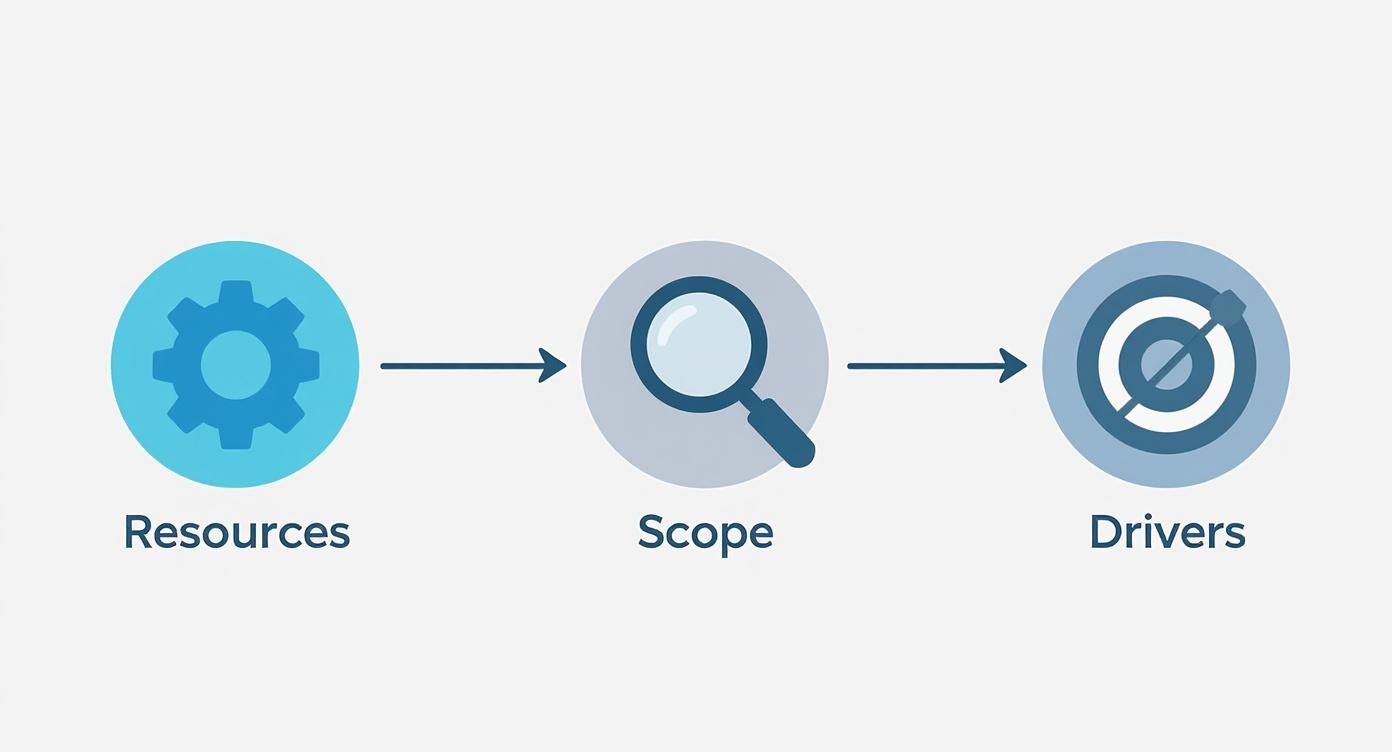
Having this level of clarity before you even start looking is what separates a frustrating, drawn-out search from an efficient and successful one.
Where the Real Experts Are Hiding
Forget endless, generic Google searches for a moment. While they can be a starting point, you'll often end up wading through a sea of generalists. To find a true specialist, you need to look where credibility is baked in.
Professional networks and industry bodies are goldmines. Think about organisations like ISACA (Information Systems Audit and Control Association) or the Australian Information Security Association (AISA). These are the natural habitats of experienced, certified security professionals. Getting involved in local meetings or their online forums can quickly lead you to some solid recommendations.
A few other proven avenues to explore:
- Tap into your own network: This is often the best place to start. Talk to your peers, especially anyone in your industry who's already gone through the ISO 27001 process. There's nothing more valuable than a first-hand account from someone you trust.
- Talk to certification bodies: While they have to stay impartial and can't recommend specific consultants, they often run industry events or have directories where you can connect with reputable firms.
- Niche industry forums: If you're in a specific sector like healthcare or fintech, find the online communities where people discuss compliance. You’ll discover consultants who already speak your language and understand the unique regulatory hurdles you face.
Asking Questions That Cut Through the Fluff
Once you have a few names on a list, it’s interview time. This is your chance to see who really knows their stuff. Forget fixating on the price tag for now; your questions should be designed to probe their practical experience and methodology.
A key area to focus on is their hands-on experience with the latest ISO 27001:2022 standard. The standard has evolved, with new controls and themes. You need someone who is completely across these changes, not just dusting off old templates from 2013.
Here are a few sharp questions to get the real story:
- "Walk me through a project you did for a company like ours. What were the biggest hurdles, and how did you get them over the line?" This pushes past theory and gets straight to relevant, practical experience.
- "What’s your first-time pass rate for clients going for certification, specifically under the 2022 standard?" A high success rate—anything over 95% is a great sign—shows they have a process that works.
- "How do you keep everyone in the loop? Tell me about your process for keeping our execs informed while making sure the technical teams stay on track." This gets to the heart of their project management and communication skills, which are absolutely critical for a smooth project.
- "What’s your philosophy on knowledge transfer? How do you make sure my team can run the ISMS on their own once you’re gone?" You're looking for a mentor, not a crutch. The goal should always be self-sufficiency.
- "Give me an example of how you've tailored Annex A controls for a client. When have you decided a generic control just wasn't the right fit?" This separates the strategic thinkers from the box-tickers.
A top-tier consultant won’t just have slick answers; they’ll fire back with insightful questions of their own. If they’re genuinely curious about your risk appetite, your business processes, and your company culture, it’s a huge green flag. It shows they're already thinking about a tailored solution, not a one-size-fits-all approach.
Using a Scorecard for an Objective Decision
After a few interviews, candidates can start to blend together. A simple evaluation scorecard is a fantastic tool to cut through the noise and make an objective, logical decision. It stops you from relying on a vague "gut feeling" and forces you to compare each ISO 27001 consultant against the criteria that actually matter to your business.
By scoring each consultant on key attributes (like the ones you defined earlier), you build a data-driven case for your final decision. If you're looking for more structured ways to handle this, engaging with dedicated ISO certification experts can provide a more formal framework.
Here’s a basic scorecard you can adapt to get started.
Consultant Evaluation Scorecard
| Evaluation Criteria | Consultant A Score (1-5) | Consultant B Score (1-5) | Notes & Justification |
|---|---|---|---|
| Industry-Specific Experience | 4 | 3 | Consultant A has worked with two other SaaS firms, which is a big plus. |
| ISO 27001:2022 Expertise | 5 | 4 | A's knowledge of the new controls was noticeably deeper and more practical. |
| Project Management Approach | 3 | 5 | B presented a much clearer, more structured communication and project plan. |
| Knowledge Transfer Strategy | 4 | 4 | Both had solid plans for upskilling our internal team, which was great to see. |
| Cultural Fit & Communication | 5 | 3 | Our team felt a much stronger and more natural rapport with Consultant A. |
| Client References | 5 | 4 | A's references were glowing and came from highly relevant companies. |
| Total Score | 26 | 23 |
This structured approach ensures your final choice is balanced and well-defended. It pushes you to weigh each factor deliberately, helping you narrow the field to the one or two candidates who are the absolute best fit for your organisation.
Understanding the True ROI of Your Partnership
It’s tempting to look at the cost of an ISO 27001 consultant as just another expense on a spreadsheet. But that’s a dangerously narrow view. A truly great partnership delivers a return on investment that goes way beyond getting a certificate to hang on the wall. It's about turning a compliance headache into a genuine business asset.
The real value becomes crystal clear when you contrast the two potential outcomes. One path leads to a smooth, successful certification that strengthens your entire organisation. The other? The costly, stressful fallout from a failed audit, which can bring lost contracts, hefty fines, and reputational damage that’s hard to shake.
The Hidden Costs of Getting It Wrong
Let's be blunt about what's really on the line. A poorly managed ISO 27001 journey isn't just frustrating—it's financially risky. A failed audit means wasted time, squandered resources, and a team that’s completely demoralised. But the consequences often ripple much, much further.
Take a real-world example: a regional Australian bank failed its Year 2 ISO 27001 audit. This wasn't a minor hiccup. Their certification was suspended, and as a direct result, they lost a $2 million data-hosting contract. The client's trust was shattered, and they took their business to a competitor who could give them the certified assurance they needed.
The potential losses don’t stop there. Think about these very real financial hits:
- Regulatory Fines: Under frameworks like Australia's Notifiable Data Breaches scheme, a security failure can lead to fines that are a crippling percentage of your annual turnover.
- Lost Opportunities: Without that ISO 27001 tick, you can be locked out of lucrative government tenders and enterprise contracts where certification is a non-negotiable entry requirement.
- Reputation Wreckage: The cost of rebuilding customer trust after a public data breach can be astronomical, far exceeding what you would have invested in a quality consultant from the start.
From Box-Ticking to a True Security Culture
A top-tier ISO 27001 consultant does so much more than just get you ready for an audit. They help you forge a lasting security culture. This is probably the most valuable—and hardest to quantify—part of the ROI. It’s the difference between a team that sees security as a chore and one that views it as everyone’s responsibility.
This cultural shift kicks in when security stops being a dusty binder of policies. It gets woven into daily workflows, team training, and even how you design new products. The right consultant is the catalyst for this change, translating complex security controls into practical, everyday habits your people can actually understand and get behind.
The ultimate goal isn't just to pass the audit. It's to build an organisation where security is so ingrained in your DNA that passing the audit becomes a natural byproduct of how you do business every day.
This proactive mindset is what transforms your ISMS from a static document into a living, breathing system that actively defends your business. It means your team is far more likely to spot a phishing email, report a vulnerability, or handle sensitive data correctly without a second thought.
The Tangible Returns of a Successful Partnership
When you find the right expert, the return on your investment becomes obvious and measurable. A skilled consultant helps streamline operations, slash long-term risks, and directly boosts your bottom line in ways you might not have anticipated.
One of the most immediate gains is operational efficiency. A good consultant will help you rationalise your security controls, ditching redundant processes and automating what they can. This doesn't just tighten your security; it frees up your team's time to focus on work that actually grows the business.
Here are just a few of the financial and strategic wins you can expect:
- Reduced Risk of Breaches: A well-built ISMS dramatically lowers the odds of a costly data breach, saving you from fines, legal fees, and customers heading for the door.
- Lower Insurance Premiums: Many cyber insurance providers offer better premiums to organisations with a certified ISMS because it proves you're serious about managing risk.
- A Sharper Competitive Edge: Certification is a powerful differentiator. It gives you a clear advantage over competitors who can't offer the same level of security assurance.
Ultimately, working with an effective ISO 27001 consultant reframes the entire exercise. It stops being about compliance and starts being a strategic investment in your company’s future. The justification goes far beyond the initial invoice, creating value across sales, operations, and risk management. For a deeper look, our article on the ROI of cyber security explores how these investments truly pay off.
Building a Partnership That Delivers Long-Term Success

Signing on with an ISO 27001 consultant isn’t the finish line; it’s the starting pistol. The real work begins now. How you manage this new partnership will dictate not just the success of your certification audit, but the long-term health of your entire Information Security Management System (ISMS).
Think of it as a collaboration, not a transaction. A great consultant doesn't just drop a pile of templates on your desk. They embed themselves in your team, challenge your old ways of thinking, and ultimately empower your people to take ownership of security.
The goal isn't just about getting a certificate to hang on the wall. It’s about building a resilient security culture that protects your business long after the consultant’s contract ends.
Establishing the Ground Rules for Success
Before you dive into the nitty-gritty, you need to set the stage. Clarity from day one is your best friend. This means defining roles, opening up communication channels, and making sure everyone is on the same page.
A simple kickoff meeting is the perfect place to start. Get your consultant in a room with key stakeholders from across the business—not just the IT crew, but people from HR, legal, and operations. This sends a powerful message: security is everyone’s responsibility.
In that first session, lock down the basics:
- A Clear Communication Plan: How often will you meet? Who needs to be there? What’s the protocol for urgent questions—a quick call or a formal email?
- Defined Roles and Responsibilities: Who is the consultant's primary contact on your team? Who is on the hook for chasing up documents or scheduling interviews?
- Realistic Timelines and Milestones: Work with your consultant to map out a project plan with achievable goals. A seasoned pro will know how to set a pace that keeps things moving without burning out your team.
Nailing this at the start saves you from the friction and misunderstandings that can completely derail a project down the line.
Integrating the Consultant with Your Internal Team
Your consultant brings the ISO 27001 expertise, but your people hold the institutional knowledge. The real magic happens when you fuse those two things together. This means creating an environment where your staff feel comfortable asking questions and soaking up the consultant’s knowledge.
Encourage your team to shadow the consultant wherever it makes sense. For instance, when they’re conducting a risk interview with a department head, have one of your team members sit in. This is a golden opportunity for real-world learning that you just can't get from a training course.
The most significant value an ISO 27001 consultant provides is not just their expertise, but their ability to transfer that expertise to your team. Your aim should be to absorb as much of their knowledge as possible, building lasting in-house capability.
This knowledge transfer is what gets you to self-sufficiency. You want your team to be able to run the ISMS, conduct internal audits, and lead management reviews with confidence long after the consultant is gone. In a way, a truly great consultant is always trying to make themselves redundant.
Navigating the Transition to ISO 27001:2022
The standard doesn't stand still. The latest version, ISO 27001:2022, has brought in new themes and a list of updated controls. A skilled consultant is your navigator here, ensuring your ISMS is not just compliant, but genuinely relevant to today's threats.
They'll help you unpack the new controls covering things like threat intelligence, data leakage prevention, and cloud security. More importantly, they’ll help you figure out which ones actually apply to your business, tailoring the framework to your unique risk profile instead of taking a one-size-fits-all approach.
For many small and medium-sized businesses in Australia, this is where that expert guidance really pays off. Consulting firms are finding that a structured, automated implementation can reduce the effort by up to 70%. This approach is leading to first-time audit success rates approaching 100%. Having a certified expert on hand demystifies the new standard and dramatically improves your readiness for the audit. You can get a deeper look into how Australian SMBs are tackling ISO standards to see this trend in action.
Preparing for the Rhythm of Continual Improvement
Getting certified is just the beginning. ISO 27001 operates on a three-year cycle of maintenance and improvement. A crucial part of your consultant's job is to get your organisation ready for this ongoing rhythm of surveillance audits and internal reviews.
They'll help you embed the core processes that keep your ISMS effective and alive:
- Internal Audits: They should train your team on how to conduct thorough internal audits, giving them the tools and confidence to assess your own compliance.
- Management Reviews: A good consultant will run your first few management review meetings, showing your leadership what they need to see and what decisions they need to make to properly govern the system.
- Corrective Actions: When problems pop up (and they will), they will guide you through fixing them and documenting the process, showing auditors you have a robust system for improvement.
By weaving these practices into your day-to-day operations, security stops being a project and starts being just how you do business. This proactive mindset turns compliance from a frantic, periodic scramble into a state of constant readiness. Future audits become far less stressful—and far more successful.
Answering Your Top Questions About ISO 27001 Consultants
So, you've done your homework, shortlisted a few names, and you're close to making a decision. But there are probably still a few nagging questions rattling around. That’s completely normal. Bringing on an ISO 27001 consultant is a big commitment, and you want to be absolutely sure before you sign on the dotted line.
Let's tackle some of the most common questions we hear from Australian businesses right at this stage. Getting clear, honest answers to these will give you the confidence that you’re setting your partnership up for a win from day one.
"How Long is This Going to Take?"
This is always the first question, and the only honest answer is: it depends. If a consultant throws out a timeline without knowing the first thing about your business, that’s a red flag. The reality is, the project length is shaped by your unique situation.
A lean tech startup in Adelaide with 20 staff and a tightly defined scope might power through to certification in just three to six months. On the other hand, a large manufacturing firm with sites scattered across Australia and a sprawling supply chain could be looking at a 12 to 18-month journey.
What makes the timeline swing so much? It comes down to a few key things:
- The Scope of Your ISMS: Are you certifying a single product line or the entire organisation? A laser-focused scope is always going to be quicker.
- Your Starting Point: If you’ve already got some solid security policies and controls in place, you’re not starting from scratch. If you are, the project will naturally take longer.
- Your Team's Availability: A successful project needs your people's input. If your key players are already stretched thin, things will inevitably slow down.
A credible consultant won’t sell you a fantasy timeline. They’ll want to do a bit of discovery first to understand the nuts and bolts of your operation before giving you a realistic estimate.
"What’s the Difference Between a Consultant and an Auditor Anyway?"
This is a massive point of confusion, but the distinction is critical. Your ISO 27001 consultant and your ISO 27001 auditor are two completely different roles, and they must be filled by separate, independent companies.
It’s actually pretty simple when you think of it in sporting terms.
- The Consultant is your coach. They’re on your team. Their job is to get you match-fit – helping you build the ISMS, write the policies, assess risks, and train your team. They’re in your corner, working to get you across the finish line.
- The Auditor is the referee. They are impartial officials from an accredited certification body. Their job is to show up on game day and objectively assess whether your ISMS plays by the rules of the standard.
Using the same company for both is a major conflict of interest and is strictly forbidden. Any good consultant knows this inside and out and will even help you find a reputable, accredited certification body to act as your "referee" when the time comes.
"What's This Going to Cost Us?"
The cost of hiring an ISO 27001 consultant in Australia can vary wildly, so be cautious of anyone who gives you a one-size-fits-all price without digging into the details of your business. The final figure really hinges on how much help you need and how complex your organisation is.
You’ll generally see a few pricing models out there:
- Daily Rate: A common model for seasoned pros. In Australia, you can expect this to be anywhere from $1,500 to over $3,000 per day, based on their experience and reputation.
- Fixed Project Fee: Some firms will quote a single price for the whole project. This is great for budget certainty, but make sure the contract spells out exactly what’s included to avoid surprise costs later.
- Retainer Model: This is more for post-certification support. A monthly retainer can cover ongoing help with things like internal audits and management reviews, keeping your ISMS in top shape.
For a smaller business, the total consultancy investment might land somewhere between $20,000 and $40,000. For a larger, more complex company, that figure could easily sail past $100,000. The trick is to reframe this from a cost into an investment in a stronger, more resilient business.
"What If We Fail the Audit?"
This is a huge fear for many, but it’s an outcome a good consultant works tirelessly to avoid. A massive part of their value is making sure there are no nasty surprises when the official auditor arrives.
The certification audit itself is a two-stage process, which helps de-risk it. The Stage 1 audit is basically a dress rehearsal where the auditor reviews your documentation. Any glaring gaps get flagged here, giving you a chance to fix them before the main event.
In the final Stage 2 audit, any issues found are classified:
- Major Nonconformity: This is a big one—a fundamental failure of a required process or control. It's a showstopper, and certification is on hold until you prove you've fixed it. Your consultant’s number one job is to ensure you have zero of these.
- Minor Nonconformity: A less serious slip-up, like a single lapse in an otherwise solid process. You can still be recommended for certification, but you’ll have to provide a plan to fix the issue.
- Opportunity for Improvement: This isn’t a finding, just a helpful suggestion from the auditor. Think of it as free advice.
A consultant worth their salt will have an incredibly high first-time pass rate for their clients because they’ve already put you through the wringer with their own internal audits.
"Can't We Just Do This Ourselves?"
Technically, yes, you can. There’s no rule saying you have to use a consultant. For most organisations, though, especially those new to the world of ISO standards, going it alone is a classic case of false economy.
Trying to DIY your ISO 27001 certification often leads to:
- Painfully Slow Progress: Your team will burn hundreds of hours trying to decipher the standard, reinventing documents, and falling into all the common traps.
- Hidden Internal Costs: Every hour your skilled people spend on this is an hour they’re not spending on their actual, revenue-generating jobs. The opportunity cost is huge.
- A Higher Chance of Failure: Without the battle-tested experience of someone who’s been through dozens of audits, it’s far too easy to misread a requirement and fail the audit, sending you back to square one.
An experienced ISO 27001 consultant isn’t just a guide; they’re an accelerant. They bring the expertise to get it done right, the efficiency to get it done fast, and the assurance you need to build an ISMS that actually works for your business.
Ready to build a resilient and trustworthy organisation with ISO 27001 certification? Anitech has over 20 years of experience and a 100% success rate in guiding Australian businesses through the process. Let our experts simplify your journey to compliance and give you a competitive edge. Visit us at https://iso-27001.com.au to learn how we can help.
Recent Comments