

Diving into an ISO certification project can feel like a mammoth task, but getting the right ISO consultants on your team can make all the difference. This isn't just about passing an audit; it's about finding a genuine partner who can weave the standard's requirements into the very fabric of your business goals, creating real, lasting value.
Your Blueprint for Finding Top-Tier ISO Consultants
Jumping into a search for a consultant without a clear plan is a recipe for disaster. It’s like trying to build a house without a blueprint. The most crucial work you'll do happens before you even pick up the phone or send that first email. You need to get crystal clear on what you need, why you need it, and what a successful outcome actually looks like for your organisation.
Taking the time to do this internal groundwork helps you avoid a classic mistake: hiring someone who just slaps a generic template onto your business. Your company is unique—you have your own processes, your own culture, and your own risks. The right consultant will build a management system that fits you, not try to shoehorn your operations into a pre-made box.
Pinpoint Your Specific Needs
Before asking "Who should we hire?", you need to answer "Which standard are we chasing and why?". Are you aiming for ISO 27001 to lock down your information security, ISO 9001 to refine your quality management, or maybe ISO 14001 to handle your environmental responsibilities? Each standard is a different beast and demands its own specialised expertise.
To get a feel for how to vet these kinds of experts, it helps to look at how businesses hire other specialist advisors. For example, the same principles for choosing from these Top IT Consulting Companies in South Africa apply when you're looking for a top-notch ISO consultant.
Think beyond just the standard itself and consider how deep you need the support to go. Are you after a consultant for:
- Gap Analysis: A quick health check to see how you currently stack up against the standard's requirements.
- Full Implementation: Someone to guide you from the very beginning—planning, documentation, internal audits—right through to selecting your certification body.
- Internal Audit Training: Help to upskill your own team so they can run the system themselves in the long run.
- Post-Certification Support: Ongoing help to maintain and continually improve your management system after the certificate is on the wall.
Knowing exactly what you need upfront makes it so much easier to find the right people and set a budget that makes sense.
Before you start outreach, sit down with your team and map out your specific needs. The table below can guide that internal conversation, ensuring you cover all your bases.
Defining Your ISO Consulting Needs
| Requirement Area | Key Questions to Ask Internally | Why It Matters |
|---|---|---|
| Scope & Standard | Which ISO standard are we targeting (e.g., 27001, 9001)? What specific business units or locations are included? | Narrows the search to specialists and prevents scope creep later on. |
| Project Goals | Beyond certification, what do we want to achieve? (e.g., win new contracts, improve efficiency, reduce security incidents). | Helps you find a strategic partner, not just a compliance checker. |
| Level of Support | Do we need full end-to-end implementation, a gap analysis, or just training for our team? | Dictates the consultant's time commitment, skill set, and overall cost. |
| Timeline & Budget | When do we need to be certified by? What is our realistic budget for consulting and certification fees? | Sets clear expectations and filters out consultants who can't meet your financial or time constraints. |
| Internal Resources | Who from our team will be the project lead? How much time can they dedicate to this? | A consultant can't work in a vacuum; knowing your internal capacity is critical for success. |
Having clear answers to these questions will make your search infinitely more effective and ensure you find a consultant who is the right fit from day one.
"The difference between a compliance-focused consultant and a strategic partner is immense. One gets you a certificate for the wall; the other helps you build a more resilient, efficient, and trusted business."
Aligning Compliance with Business Goals
Let's be clear: getting an ISO certificate shouldn't just be a box-ticking exercise. It's a massive opportunity to sharpen your processes, slash your risks, and get a leg up on the competition. The demand for this kind of expert help is skyrocketing. In Australia, the ISO certification market is projected to hit USD 122.7 million in the near future. This isn't just a trend; it shows that smart businesses are using these standards to get real-world results—often achieving certification up to 40% faster with a pro on their side.
This is why your initial blueprint has to connect the dots between the certification project and your bigger business objectives. Get your leadership team in a room and ask: what do we really want to get out of this? Maybe it's breaking into new markets that demand certification, making your operations run smoother, or simply boosting your company’s reputation.
Clarifying these goals from the start helps you find an advisor who gets your vision and can deliver a lot more than just a piece of paper. At our firm, we provide ISO consulting services that are specifically designed to embed these standards right into the core of your business strategy, where they can make a real impact.
Vetting ISO Consultants Beyond the Brochure

Alright, you’ve got your shortlist. Now comes the crucial part: separating the real experts from the slick marketers. Anyone can build a glossy website or deliver a confident sales pitch. What you’re looking for is proven expertise, and that's much harder to fake.
This is where you need to roll up your sleeves and dig deeper. Your goal isn't just to find someone who knows the ISO 27001 standard; it's to find a partner who understands your world—your industry, your operational headaches, and what you’re trying to achieve. A consultant armed with generic, one-size-fits-all templates is a liability, not an asset.
Verify Credentials and Real-World Experience
First things first, get specific about their experience. If you’re a software company pursuing ISO 27001, a consultant whose background is primarily in ISO 9001 for manufacturing simply won't cut it. They won't grasp the subtleties of your information security risks.
Don't be afraid to ask for proof.
Look for concrete evidence of their work. A vague testimonial saying they were "great to work with" is nice, but it tells you nothing. You want case studies or references that spell out the client’s challenges, the solutions they implemented, and—most importantly—the tangible business outcomes. What changed for the better?
A great ISO consultant doesn't just get you certified. They leave your organisation stronger, more efficient, and more resilient than they found it. Their impact should be measurable long after the audit is complete.
Understanding best practices in areas like optimizing operations for consulting and management businesses can also give you a lens through which to gauge a consultant's own professionalism and efficiency.
Assess Their Methodology and Approach
How a consultant works with you is just as important as what they know. When you're talking to them, really probe into their process. Do they have a clear, structured methodology, or does it feel like they’re winging it?
- Customisation vs. Templates: Ask them point-blank how they adapt their approach for a business of your size and in your sector. If they can't give you a clear answer, that's a major red flag.
- Team Engagement: Find out how they plan to involve your team. The best consultants act as coaches. They transfer knowledge and empower your staff, not just do all the work themselves and leave you in the dark.
- Tools and Documentation: What platforms or tools do they use to manage the project and its documentation? A clear, organised system for tracking progress is a tell-tale sign of a professional.
For a bit more insight into what separates the top-tier advisors from the pack, it’s worth checking out some ISO consulting services reviews to see what past clients really valued.
Check Their Relationships with Certification Bodies
A consultant’s relationship with certification bodies speaks volumes about their credibility. Seasoned ISO consultants have established networks and a deep understanding of what different auditors look for.
Here in Australia, all the top certification bodies are JAS-ANZ accredited, and they often rely on good consultants to properly prepare businesses for the audit. In fact, an effective consultant can often slash the typical implementation timeline from 12 months down to just 6-9.
Ask potential consultants which certification bodies they've worked with and what their experience has been like. That kind of insider knowledge is invaluable and can make your entire certification journey a whole lot smoother.
Mastering the Interview Process with Potential ISO Consultants
Alright, let's move past the résumés and get to the real heart of the matter: the interview. This is where you’ll separate the true experts from those who just look good on paper.
This conversation is your best chance to see beyond the certifications. You need to get a feel for their communication style, see how they tackle problems, and, just as importantly, decide if they're someone your team can actually work with. Forget the generic questions; they only get you generic, rehearsed answers.
Instead of asking, "So, tell me about your ISO 27001 experience," you need to put them on the spot with real-world scenarios. This is how you'll find out if they can think practically or if they're just going to quote the standard back at you.
Can They Actually Solve Problems?
A great interview should feel less like a formal Q&A and more like a brainstorming session. You're trying to see how they think when the pressure is on and things inevitably go off-script.
Here are a few questions I’ve found that really cut through the noise:
- "Tell me about a time you had to get a reluctant leadership team on board with a major process change. What did you do to win them over?"
- "Walk me through a project that was falling behind. What were the first things you did to get it back on track?"
- "Let's say you uncover a huge non-conformance just a few weeks before the Stage 1 audit. What are your immediate next steps?"
Their answers here are gold. You’re not just listening for a textbook response; you’re looking for signs of tact, clear-headed thinking, and a focus on getting things done rather than just ticking boxes.
The best ISO consultants are translators. They can take complex clauses from the standard and explain their business impact in a way that your finance director, your IT team, and your marketing department can all understand and support.
How Well Do They Communicate and Manage a Project?
An expert who can't explain what they're doing in plain English is more of a hindrance than a help. Remember, this person will be talking to everyone from your CEO down to your junior staff. They need to be able to switch gears and speak everyone's language.
Pay attention to how they answer your questions. Are they drowning you in acronyms and jargon, or are they making complex ideas feel simple and relatable? A consultant who can do the latter is worth their weight in gold. This is especially true when a project has a heavy technical component; finding the right cyber security consultant who also lives and breathes ISO 27001 means finding someone who is an exceptional communicator.
Finally, you need to be crystal clear on how they run their projects. Don't be shy—ask them directly:
- How will you keep us updated on progress?
- What tools do you use to keep everything on schedule?
- What does your communication rhythm look like with our team?
A seasoned pro will have a confident, well-defined answer. If they stumble here or give you a vague response, it’s a massive red flag. A project this critical can’t be left to a disorganised process.
Evaluating Proposals and Finalising the Contract
Alright, you’ve done the interviews, and the proposals are starting to roll in. This is where the real work begins. It’s tempting to just scan them, but now you need to dig deep and figure out which consultant truly understands your business and has a realistic plan to get you certified.
The biggest trap I see companies fall into is immediately gravitating towards the cheapest quote. Look, I get it – budget is always a factor. But a lowball offer often means you're getting a cookie-cutter approach, or worse, you'll be hit with unexpected "out-of-scope" charges down the line. What you're really looking for is the best value, not just the lowest price. A great proposal should read like a clear, confident project plan.
Deconstructing the Proposal
Think of a proposal as a window into how a consultant operates. Is it vague and full of marketing fluff, or is it a detailed, actionable roadmap? The good ones will lay everything out on the table, leaving no room for doubt.
As you sift through the documents, keep an eye out for these critical components:
- A Detailed Scope of Work: The proposal must clearly draw the line. Does it cover everything from the initial gap analysis all the way through to supporting you during the final audit? Or are they only handling one piece of the puzzle?
- Concrete Deliverables: What are you actually getting for your money? You want to see specifics like a "fully documented ISMS policy," a "completed risk assessment register," or an "internal audit findings report." If all you see are fuzzy promises like "ongoing strategic support," that’s a major red flag.
- A Realistic Timeline with Milestones: A seasoned pro will give you a project plan with clear phases and target dates. This isn’t just for show; it proves they have a structured methodology and gives you a way to hold them accountable.
- A Transparent Fee Structure: All costs should be broken down. Is it a fixed project fee or a daily rate? Are travel and other expenses included? This kind of transparency is non-negotiable if you want to avoid a budget blowout.
To help you compare apples with apples, I've put together a simple checklist. You can use this to score each proposal and see how they stack up against each other.
Consultant Proposal Comparison Checklist
Use this table to objectively compare the proposals you receive. It helps move the decision beyond just the price tag and focus on the crucial details that determine project success.
| Evaluation Criteria | Consultant A | Consultant B | Consultant C |
|---|---|---|---|
| Clarity of Scope | |||
| Specificity of Deliverables | |||
| Project Timeline & Milestones | |||
| Transparent Pricing | |||
| Relevant Experience/Case Studies | |||
| Team/Consultant Profile | |||
| Audit & Post-Certification Support | |||
| Overall Value (Not Just Price) |
By filling this out, you’ll get a much clearer picture of who is offering the most comprehensive and well-thought-out partnership for your ISO 27001 journey.
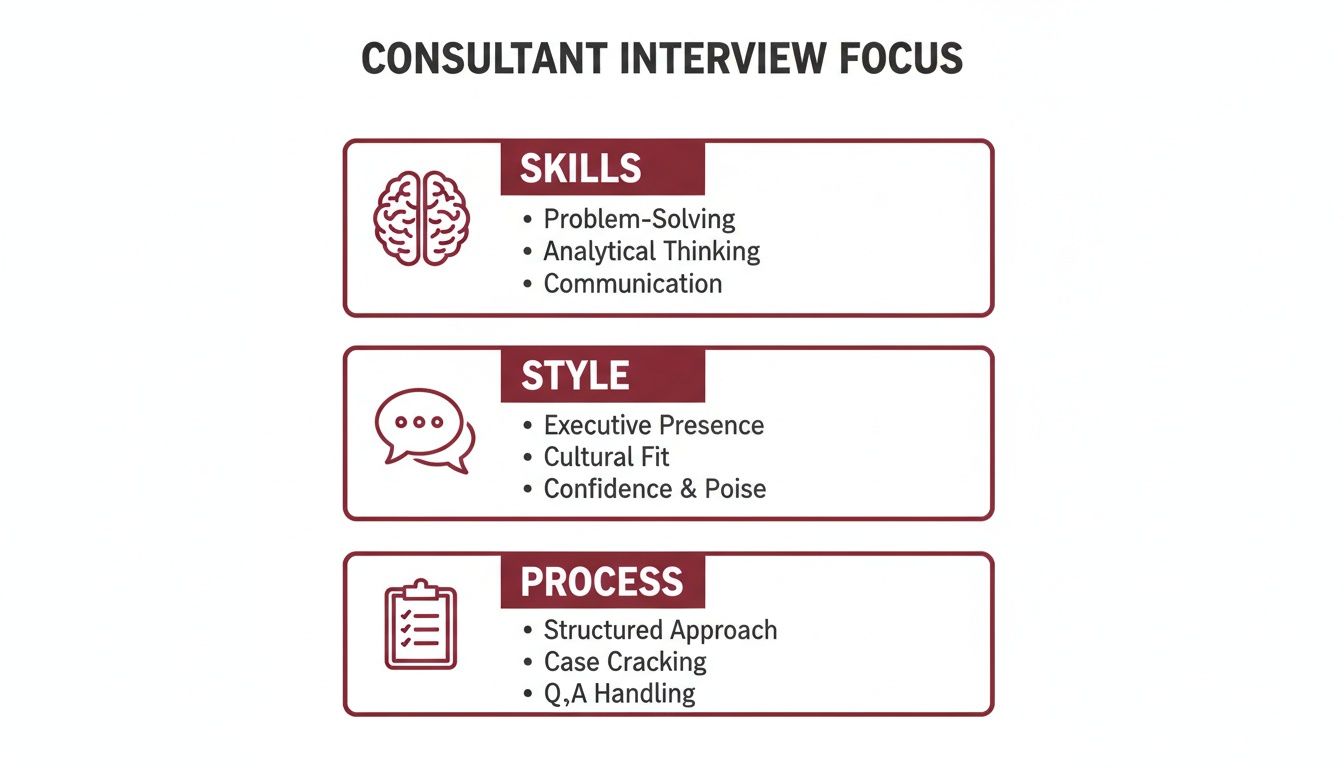
Ultimately, a successful engagement comes down to more than just technical chops. It's a mix of their expertise, how they communicate, and the rigour of their process.
Finalising a Contract That Protects You
Once you’ve made your choice, there’s one last hurdle: the contract. Please, don’t just sign on the dotted line. This legal document is what turns all those promises from the proposal into firm, binding commitments. It’s your safety net.
Your contract isn't just a formality; it's the foundation of your working relationship. It should set clear expectations for both parties and provide a framework for resolving any issues that might arise.
Drill down into the fine print and make sure these key clauses are solid:
- Confidentiality: This is a big one. The consultant will be seeing your company’s inner workings. A rock-solid non-disclosure agreement (NDA) is absolutely essential to protect your sensitive information.
- Audit Support: Get specific about what happens during the external certification audit. Will they be on-site with you? How will they help you address any non-conformances the auditor finds? You don’t want any surprises here.
- Post-Certification Assistance: What happens after the champagne pops? A good partner will often include a set number of support hours for the first year to help you prepare for surveillance audits and keep the ISMS running smoothly.
Getting the contract right ensures the engagement kicks off on a strong footing. It aligns everyone’s expectations and turns your chosen consultant from a simple vendor into a genuine partner who is invested in your long-term success.
Building a Successful Partnership With Your Consultant
Getting one of the best ISO consultants on board is a huge win, but it’s really just the first play of the game. The real measure of success for your certification project comes down to whether you can turn that vendor relationship into a genuine, collaborative partnership. This is where the consultant's advice stops being theoretical and starts making a real impact, and it requires you to be actively involved to get the most out of their expertise.
A great partnership doesn't just happen. It’s built, piece by piece, on a foundation of clear communication, mutual respect, and a shared vision of the end goal. Your consultant is there to be your guide, but it's your team that has to do the legwork. You need to create an environment where your people see the consultant not as some outsider paid to find fault, but as a coach who's there to help them get better.
Establishing Clear Communication and Roles
Once the ink is dry on the contract, your very first move should be to set the ground rules. Trust me, ambiguity is the biggest project killer out there. The simplest way to avoid it is to pick one person inside your organisation to be the primary point of contact. This person becomes the central hub, keeping information flowing smoothly and stopping the consultant from getting conflicting requests from a dozen different people.
This internal champion will be in charge of:
- Booking all the important meetings and workshops.
- Getting the consultant the access they need to documents, systems, and people.
- Keeping the rest of the company in the loop on project updates and wins.
Without this single point person, you'll end up with crossed wires and stalled progress almost immediately. It’s also a great idea to lock in a regular communication schedule, like a weekly check-in call or a shared Trello board, so everyone knows exactly where things stand.
The most effective engagements I’ve seen are the ones where the consultant is treated like a temporary, but integral, part of the internal team. When communication is seamless and everyone knows their role, the consultant can focus on delivering high-level strategic advice instead of chasing down documents.
Fostering Buy-In and Managing the Project
One of the biggest hurdles you'll face is almost always internal resistance. It’s human nature. People can be sceptical of new processes, especially when an external expert brings them in. Your job, working hand-in-hand with the consultant, is to constantly sell the "why" behind every change. You need to clearly explain how these new procedures aren't just about ticking a box for a certificate, but will actually make their jobs easier, protect the company, or even improve the product.
You also have to manage this project with the same rigour you'd apply to any other critical business initiative. Keep a close eye on the milestones you agreed on in the proposal and jump on any roadblocks the moment they appear. If you hit a snag, don't just sit back and wait for the consultant to point it out. Be proactive. Bring it up, brainstorm solutions together, and figure out how to get things moving again. This kind of hands-on approach is what ensures the consultant’s knowledge actually sticks, creating a culture of security that lasts long after the final audit is done.
Your ISO Consultant Questions, Answered
Jumping into the world of ISO standards can feel a bit daunting, and it's natural to have questions, especially when you're thinking about bringing in an expert. Let's tackle some of the most common things business owners ask when they're looking at hiring an ISO consultant.
How Much Should I Expect to Pay for an ISO Consultant?
This is the big one, and the honest answer is: it varies wildly. The final cost really depends on a few key things. The complexity of the standard is a major factor – something like ISO 27001 is usually a much bigger job than ISO 9001. The size of your organisation and the consultant's own track record also play a huge part.
A straightforward gap analysis might only set you back a few thousand dollars. But if you’re a larger company looking for someone to guide you through the entire implementation from start to finish, you could be looking at tens of thousands.
My advice? Always ask for a detailed quote that spells out exactly what’s included. And try to think beyond the initial price tag. Focus on the value they bring – things like getting certified faster and building a genuinely stronger system are a massive return on investment.
Can an ISO Consultant Guarantee I’ll Get Certified?
Absolutely not. If a consultant ever guarantees certification, you should see that as a massive red flag and walk away.
The final say always, always comes from the independent, accredited certification body that performs the official audit. A consultant's job is to get you ready for that audit. They are your guide, your strategist, and your implementation partner. They'll help you build a management system that hits every requirement of the standard.
What a good consultant can guarantee is their own work. This means if the auditor finds any non-conformances, your consultant will be right there with you to help fix them.
What's the Difference Between a Consultant and an Auditor?
It's crucial to get your head around this distinction, as it’s fundamental to the whole process.
- A Consultant is your advocate. They're on your team, working for you. Their entire focus is on helping you build and implement a management system that will not only pass the audit but also benefit your business.
- An Auditor is an impartial umpire. They work for a separate certification body and their job is to independently verify whether your system meets the ISO standard. They aren't there to help you; they're there to assess you.
To keep things fair and avoid any conflicts of interest, the person or company that consulted on your system can never be the one to audit it for certification.
Think of it like this: Your consultant is the coach who gets the team ready for the championship game. The auditor is the referee who makes sure everyone plays by the official rules.
How Long Will It Take to Get Certified With a Consultant?
Bringing in one of the right ISO consultants can definitely speed things up. While every business is unique, a typical small to medium-sized organisation should probably plan for a timeline of 6 to 12 months.
This can be influenced by a few variables, of course. How complex are your current operations? How much documentation do you already have in place? And, importantly, how much time can your own team commit to the project? A seasoned consultant will be able to give you a realistic project plan right from the start and will be instrumental in keeping everything moving forward to hit your deadlines.
At Anitech, we specialise in guiding Australian businesses through the complexities of ISO 27001. With a 100% success rate, we provide the expert support you need to not only achieve certification but also build a stronger, more secure organisation. Learn more at https://iso-27001.com.au.
Recent Comments