

Think of managed cybersecurity services as outsourcing your digital security to a team of dedicated experts. They provide 24/7 protection against online threats, giving your business access to top-tier security talent and technology without the staggering cost of building it all from the ground up.
Your Digital Fortress: A Modern Defence Strategy
Let's use an analogy. Imagine your business is a fortress. To keep it safe, you could hire your own guards, invest a fortune in surveillance equipment, and spend countless hours training your own team. You'd have to hope you’ve covered every single weak point. It’s a huge undertaking—expensive, incredibly complex, and demanding constant attention. Truthfully, most organisations just can't keep up.
But there’s a much smarter way.
Instead, you could bring in an elite, external security force. A team that already has the best technology, the most experienced guards, and is on high alert around the clock. That's exactly what managed cybersecurity services offer. A Managed Security Service Provider (MSSP) becomes your dedicated digital security partner.
Their role goes way beyond just setting up a firewall or installing antivirus software. An MSSP delivers continuous, active defence for your entire operation.
This infographic paints a great picture of how an MSSP acts as a centralised command centre for your digital fortress.
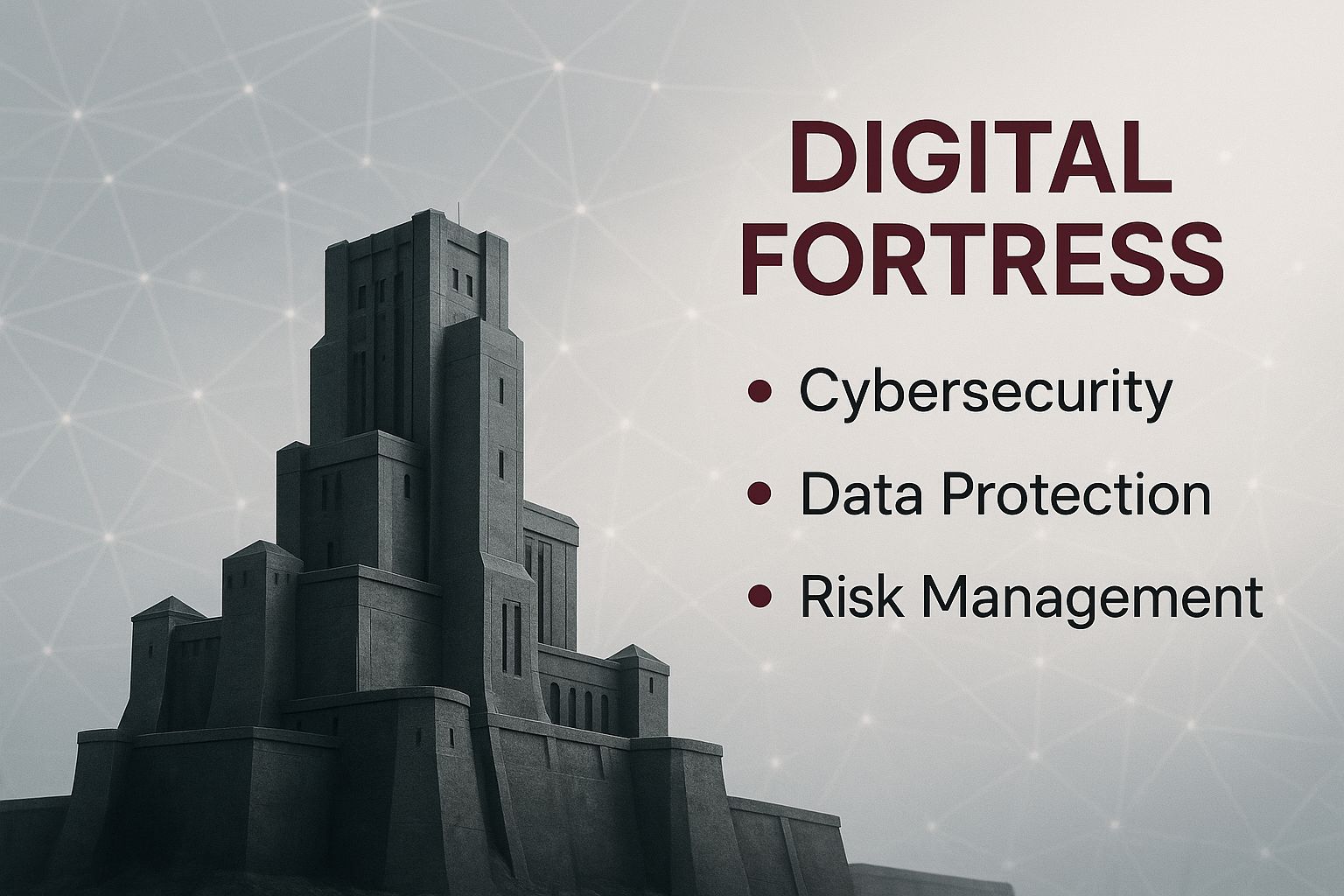
As you can see, it's all about creating a strong, unified defence—and that’s precisely what a great MSSP brings to the table.
Beyond Basic IT: The Role of an MSSP
It's easy to mix up managed security with general IT support, but they are worlds apart. Your regular IT provider (often called an MSP) keeps your systems up and running. An MSSP, on the other hand, is laser-focused on one thing: protecting those systems from attack. Their work is highly specialised and always proactive, building a digital shield around your business.
So, what does an MSSP actually do?
- Continuous Monitoring: They use sophisticated tools to keep a watchful eye on your network 24/7, looking for any hint of suspicious activity.
- Proactive Threat Hunting: They don't just wait for alarms to go off. Their analysts actively hunt for hidden vulnerabilities and brewing threats before attackers can exploit them.
- Rapid Incident Response: The moment an attack is detected, they spring into action to contain it, minimise damage, and get you back to business as quickly as possible.
- Vulnerability Management: They regularly scan your systems for weaknesses and give you clear, actionable advice on how to patch them, making your defences stronger over time.
This forward-thinking approach is absolutely crucial. Cyber threats are always changing, and a purely reactive security strategy is a recipe for disaster. An MSSP keeps you one step ahead of the criminals.
A strong cybersecurity posture isn't a "set and forget" task. It's a continuous cycle of monitoring, adapting, and responding. Partnering with an MSSP embeds this discipline into your operations without draining your internal team.
Deciding between building an in-house team and partnering with an MSSP is a major strategic choice. This table breaks down the key differences to help you see which path makes sense for your business.
In-House IT vs Managed Cybersecurity Services
| Factor | In-House Security Team | Managed Cybersecurity Services (MSSP) |
|---|---|---|
| Cost | High initial and ongoing costs (salaries, software, hardware, training). | Predictable monthly or annual fees. Significantly lower total cost of ownership. |
| Expertise | Limited to the skills of the individuals you can hire and retain. | Access to a deep bench of specialists with diverse, up-to-date skills. |
| Availability | Typically standard business hours. 24/7 coverage requires multiple shifts and is very expensive. | Guaranteed 24/7/365 monitoring and incident response. |
| Technology | Requires massive capital investment in security tools (SIEM, EDR, etc.) and ongoing maintenance. | Leverages a suite of enterprise-grade tools that are included in the service fee. |
| Scalability | Slow and difficult to scale. Hiring new security talent is a major challenge. | Flexible and scalable. Services can be easily adjusted as your business grows or needs change. |
| Focus | Internal team is often pulled into general IT tasks, diluting their security focus. | 100% dedicated to cybersecurity. No distractions, just pure security focus. |
Ultimately, an MSSP offers a more resilient, cost-effective, and expert-driven security model for the vast majority of businesses today.
The Strategic Advantage for Australian Businesses
For most Australian businesses, creating an enterprise-level security team from scratch just isn't practical. The sky-high cost of security technology combined with a severe shortage of skilled cybersecurity professionals puts it out of reach. The local skills gap is a huge concern, making it incredibly difficult to find and keep the right people.
This is where managed cybersecurity services become a powerful strategic asset.
By partnering with an MSSP, you instantly gain access to a team of seasoned experts and advanced security tools that would otherwise be impossible to afford. It frees you up to concentrate on running your business, giving you the peace of mind that your digital assets are being protected by specialists.
And this model isn't just for big corporations. It provides a scalable and affordable solution for small and mid-sized businesses, levelling the playing field so they can defend against the same threats targeting global giants. You can take a deeper look into how our managed IT services security strengthens your business operations. It’s the modern solution for Australian businesses needing to effectively defend themselves in an increasingly dangerous online world.
The Core Services of a Managed Security Program
When you bring a Managed Security Service Provider (MSSP) on board, you're not just buying another piece of software. You're investing in a complete defence program. Let’s go back to our fortress analogy for a moment. A truly strong defence is never just about one high wall. It’s a dynamic, layered system—think watchtowers, guards, engineers, and elite response teams all working in concert.
Each service within a managed security program plays a specific, vital role. This structure ensures your business is shielded from every conceivable angle, turning your security from a simple, static barrier into an active, intelligent defence network.
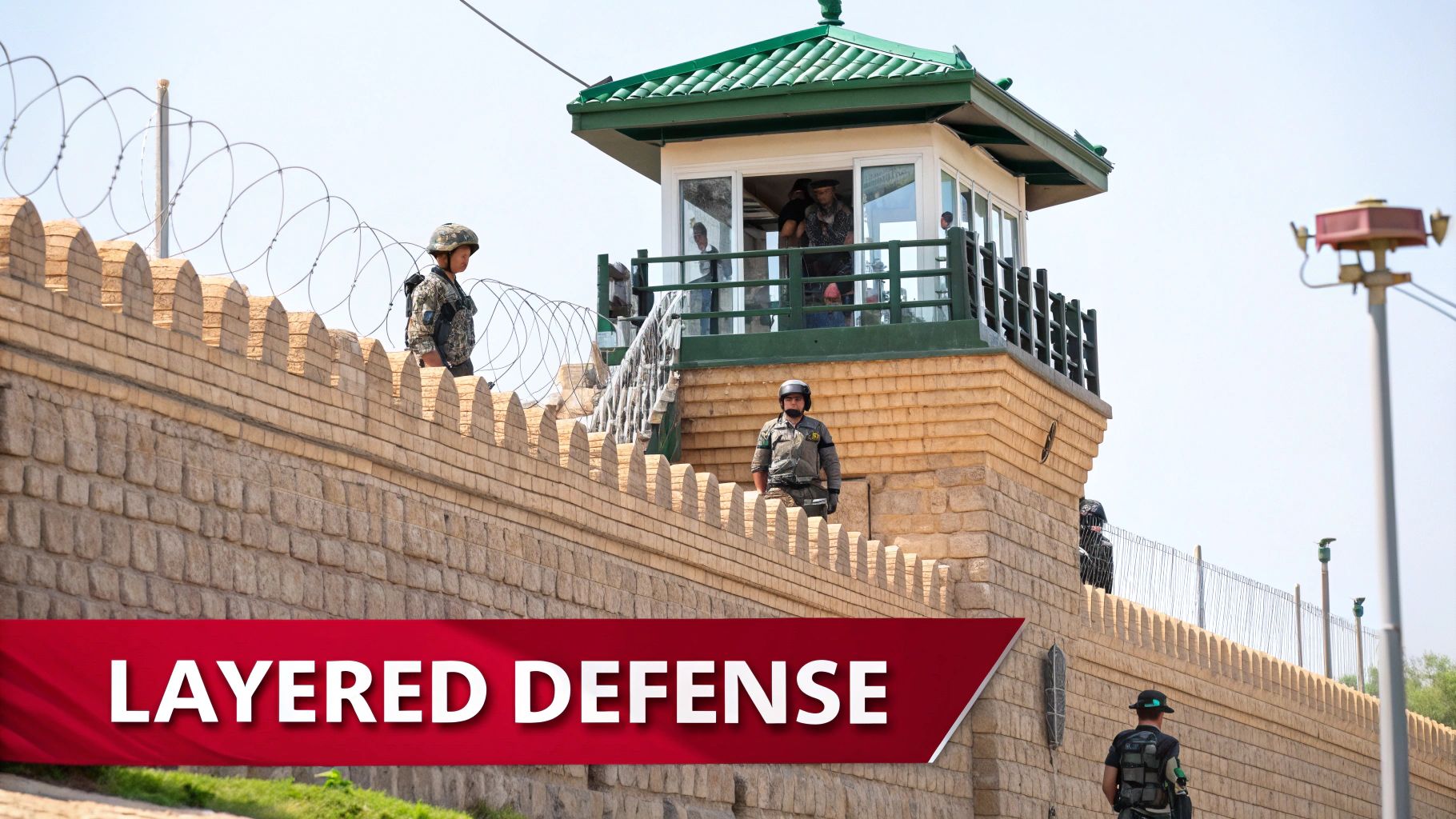
This layered approach isn't just a good idea; it's fast becoming essential for organisations right across Australia. As cyber threats rise, managed cybersecurity services have become a cornerstone for businesses and government agencies alike, with the market set for sustained growth. Within this sector, managed services are the standout—the most lucrative and fastest-growing segment, easily outpacing traditional professional services. This shift clearly shows the surging demand for outsourced, comprehensive cybersecurity management, which includes the very services we're about to dive into.
24/7 Network Monitoring and Threat Detection
Imagine this as the watchtowers of your fortress, staffed around the clock with vigilant guards who never sleep. That’s 24/7 network monitoring in a nutshell, and it’s the absolute foundation of any good MSSP. Using powerful tools like Security Information and Event Management (SIEM) systems, security analysts keep a constant eye on your entire IT environment in real-time, from on-site servers to cloud applications.
These systems pull in and analyse activity logs from all your digital assets. This allows the MSSP to spot anomalies and potential threats that would be completely invisible to the naked eye. It’s all about picking up on the subtle signs of an attack before it spirals into a full-blown crisis.
An effective MSSP doesn't just react to alarms. They correlate seemingly unrelated events across your network to uncover sophisticated attack patterns, providing a level of insight that an internal team can rarely achieve.
This constant vigilance isn't just about defence, either. It provides a complete, ongoing picture of your network's health and security posture, which is absolutely critical for making informed business decisions and satisfying compliance requirements.
Advanced Endpoint Protection and Management
If network monitoring gives you the high-level view from the watchtowers, then advanced endpoint protection puts guards at every single gate and doorway. Your endpoints—laptops, servers, and mobile phones—are the most common entry points for cybercriminals. Protecting them is non-negotiable.
MSSPs deploy sophisticated Endpoint Detection and Response (EDR) tools that are lightyears ahead of traditional antivirus software. Instead of just looking for known viruses, these solutions monitor endpoint behaviour to detect suspicious activities that signal modern attacks like ransomware or fileless malware.
This service typically includes:
- Real-time threat detection on every single company device, no matter where it’s located.
- Automated threat containment, which can instantly isolate an infected device to stop an attack from spreading across your network.
- Proactive threat hunting to actively search for hidden threats that might have slipped past your initial defences. You can learn more about how a proactive approach to identifying and neutralising cyber threats can dramatically strengthen your security.
Vulnerability Management and Assessment
A fortress is only ever as strong as its weakest point. Vulnerability management is the process of having expert engineers regularly inspect your walls, gates, and foundations, looking for cracks and weaknesses before an attacker can find and exploit them.
An MSSP will perform regular, systematic scans of your networks and applications to identify security vulnerabilities. But their job doesn't end there. A crucial part of the service is analysing those findings, prioritising the most critical risks, and giving you clear, actionable guidance on how to fix them.
This proactive process helps you systematically harden your defences over time, shrinking your overall attack surface and making your business a much harder, less appealing target for cybercriminals.
Rapid Incident Response and Remediation
Let's be realistic: no matter how strong your defences are, the possibility of a breach always exists. When an attack does happen, you need an elite team ready to spring into action immediately. This is where rapid incident response comes in.
The moment a threat is confirmed, the MSSP's incident response team executes a well-rehearsed plan to:
- Contain the Threat: The first priority is always to stop the attack from spreading and causing any more damage.
- Eradicate the Intrusion: The team works methodically to completely remove the attacker's presence from your systems.
- Recover Operations: They help your team safely restore any affected systems and data from clean backups.
- Conduct Post-Incident Analysis: After the dust settles, they analyse exactly how the breach happened and provide concrete recommendations to prevent it from ever happening again.
Understanding these core services is the first step, but it's also important to see how different providers put them into practice. For a closer look at the tactics involved, exploring various MSP's cyber security defense strategies can provide valuable context. This kind of rapid, expert-led response is what minimises downtime, cuts financial losses, and protects your organisation's reputation when it matters most.
Why Australian Businesses Need an MSSP
The move to managed cybersecurity isn't just a worldwide trend; it's become a strategic lifeline for Australian businesses. From startups in Melbourne's tech scene to established firms in finance and resources, companies are figuring out that outsourcing security is more than just an option—it’s a powerful answer to some very local challenges.
This shift is happening for a simple reason: building and keeping a top-notch in-house security team has become incredibly difficult, if not impossible, for many. The Australian market has its own set of hurdles, and a good Managed Security Service Provider (MSSP) is purpose-built to clear them, giving you immediate access to the people and technology you need to stay safe.
Confronting the Critical Skills Gap
Let’s be frank: one of the biggest headaches for any Australian business is the cybersecurity skills shortage. There just aren't enough qualified professionals to go around, and the demand is through the roof. This creates a hyper-competitive hiring market where finding, attracting, and keeping good security talent is both incredibly hard and eye-wateringly expensive.
For most small and medium-sized businesses, the salary for a single senior security analyst is a non-starter, let alone funding an entire team. This leaves them dangerously exposed, often relying on a general IT person who is already stretched thin and simply doesn't have the specialised skills to fight off modern, sophisticated attacks.
This is exactly where an MSSP changes the game. Partnering with a provider plugs you directly into a deep pool of certified experts, including:
- Security Analysts: The frontline watchers who monitor your network 24/7, hunting for threats and making sense of security alerts.
- Incident Responders: The specialists who jump into action the moment an attack happens, working to contain the damage and get you back online.
- Compliance Experts: The guides who know the ins and outs of Australia’s complex data privacy and security laws.
- Threat Intelligence Researchers: The forward-lookers who study the latest hacker tactics to keep your defences a step ahead.
It’s a model that essentially makes enterprise-grade security expertise available and affordable for everyone, not just the big end of town.
Navigating the Rising Tide of Cyberattacks
Cybercriminals aren’t lone wolves in hoodies anymore. They’re organised, well-funded syndicates running slick, professional operations. And unfortunately, they’ve got their sights set firmly on Australian businesses. From ransomware attacks paralysing healthcare providers to massive data breaches in the financial sector, local companies are right on the digital frontline.
The attacks are getting smarter, too. Hackers are using automation and AI to launch attacks at a scale and speed that human-led defences just can't keep up with. Trying to fight this with an under-resourced internal team is like bringing a bucket to a flood.
A Managed Security Service Provider (MSSP) levels the playing field. They invest heavily in the advanced security platforms—like SIEM and SOAR—that are essential for detecting and responding to modern threats at machine speed.
This is a perfect example of the economies of scale you get with an MSSP. They spread the huge cost of these powerful tools across all their clients, giving your business the same calibre of protection as a multi-billion-dollar corporation for a fraction of the price.
The Growing Burden of Regulatory Compliance
Australia’s regulatory landscape is getting stricter by the day. With frameworks like the Privacy Act and the Notifiable Data Breaches (NDB) scheme, the legal and financial sting for getting it wrong is severe. If you're in a specific industry like finance (APRA) or government contracting, the compliance bar is set even higher.
Meeting these obligations isn’t a one-off task; it's a constant, complex process. It demands detailed documentation, regular risk assessments, solid security controls, and a tested incident response plan. For an internal team, juggling compliance on top of daily security duties can be completely overwhelming. This is where an MSSP provides enormous value.
They step in to provide:
- Expert Guidance: Helping you make sense of which regulations apply to your business and what you actually need to do to meet them.
- Compliance Reporting: Generating the detailed reports and logs you need to prove you’ve done the right thing when auditors come knocking.
- Documented Processes: Using their established, best-practice procedures for things like incident response and vulnerability management to satisfy audit requirements.
This kind of support doesn't just lower your risk of a fine; it frees up your own people to focus on the strategic work that actually grows your business.
An Investment in Resilience and Growth
The unique pressures of the Australian market are exactly why managed services are taking off here. The total Australian cybersecurity market, valued at around USD 7.6 billion, is projected to grow substantially, but the managed services part of it is growing even faster. This boom is a direct answer to the struggle organisations have in finding the right people. You can explore the full research on the Australian cybersecurity market trends on mordorintelligence.com.
At the end of the day, bringing on an MSSP isn’t just a defensive move—it's a smart business decision. It's a cost-effective way to protect your operations, a clear path to meeting your compliance duties, and it gives you the flexibility to scale your security as your business grows. By placing your security in the hands of a dedicated partner like Anitech, you get the confidence and peace of mind to focus on what you do best: running your business.
Streamlining Your ISO 27001 Compliance
Getting your ISO 27001 certification is far more than just getting a certificate to hang on the wall. It’s a clear signal to your clients, partners, and the market that you take information security seriously. For any Australian business, it's a massive trust-builder. But let's be honest, the road to certification can feel like a maze of complex controls, endless documentation, and nerve-wracking audits.
This is where bringing in a managed cybersecurity services provider can be a complete game-changer.
Don’t just think of them as a digital bodyguard for your network. See them as an expert guide for your entire ISO 27001 journey. They don’t simply protect your systems; their day-to-day work is naturally aligned with the standard's requirements, making them a powerful ally in getting—and keeping—your certification.
Mapping MSSP Services to Key ISO 27001 Controls
The real magic happens when you line up what a top-tier MSSP does with the specific controls found in ISO 27001's Annex A. You quickly realise that the core services they provide are the very same building blocks you need for a solid Information Security Management System (ISMS).
Here’s how it works in the real world:
- A.12 Operations Security: This part of the standard is all about running your systems securely. Your MSSP’s 24/7 monitoring and threat detection nails this requirement, giving you constant oversight and ensuring any weird activity or potential threat is spotted and dealt with according to plan.
- A.16 Information Security Incident Management: The standard demands a clear, formal process for handling security incidents. An MSSP’s incident response and remediation service is the perfect fit. It delivers a ready-made, expert-led plan to contain, remove, and recover from a breach—and it generates the detailed reports that auditors want to see.
- A.9 Access Control: A fundamental rule: only the right people should access your information. MSSPs are masters at enforcing this through continuous monitoring and advanced tools that can flag unauthorised access attempts the moment they happen.
This direct overlap means you’re not starting from zero. You’re effectively using your MSSP’s mature, established processes to tick off major sections of the standard.
Partnering with an MSSP turns compliance from a massive, one-off project into part of your daily operations. The proof you need for an audit isn't something you have to scramble to create; it's just a natural result of the security services you’re already getting.
Leveraging Advanced Tools for Automated Compliance
Trying to meet all of ISO 27001’s requirements manually is a fast track to burnout and mistakes. A modern MSSP arrives with a whole suite of advanced technology that automates many of the most painful compliance tasks.
Take a Security Information and Event Management (SIEM) platform, which is standard kit for any good MSSP. This system does more than just hunt for attacks; it gathers, connects, and stores security logs from every corner of your IT environment. This gives you a single, searchable trail of activity that’s worth its weight in gold for proving you’re compliant with logging and monitoring controls. For those wanting to dig deeper, exploring how global standards like ISO 27001 and AI-powered risk detection can add another powerful layer to your compliance strategy.
Expert Analysis for Accurate Risk Assessments
A huge part of ISO 27001 is the risk assessment process (Clause 6.1.2). You have to methodically find, analyse, and evaluate your information security risks. This is where many businesses get stuck, as it takes real-world expertise to properly judge how likely a threat is and how much damage it could do.
This is what your MSSP's security specialists do all day, every day. They bring:
- Vulnerability Assessments: Regular scans that pinpoint technical weak spots in your systems, giving you concrete items to add to your risk register.
- Threat Intelligence: The latest information on attack trends and tactics being used against businesses in your industry.
- Expert Analysis: The human insight needed to put all these findings into context, helping you prioritise what matters most and choose the right controls.
This expert guidance makes sure your risk assessment is a practical, evidence-based process that actually strengthens your security, not just a box-ticking exercise. For companies that need more dedicated support, Anitech’s ISO 27001 consulting services can offer a structured roadmap, working hand-in-hand with your security provider.
Ultimately, using managed cybersecurity services transforms the ISO 27001 process from a mountain to be climbed into a series of clear, expert-guided steps.
Choosing the Right Cybersecurity Partner

Picking a Managed Security Service Provider (MSSP) is easily one of the most critical security decisions your organisation will ever make. This isn't just about hiring a supplier; it's about finding a partner you can trust with your most sensitive digital assets. With so many providers out there, it’s all too easy to get bogged down in technical jargon and slick sales pitches.
To make the right call, you have to look past the surface-level promises. A truly great partnership is about much more than just technology. It's about finding a team whose expertise, processes, and culture genuinely align with your business goals.
Make no mistake, this decision demands serious thought. The right partner becomes a seamless extension of your own team, while the wrong one can end up creating more problems than they solve.
Scrutinise Their Technical Capabilities and Security Stack
First things first: you need a clear picture of what’s going on behind the curtain. Don’t just take their word for it or get swayed by buzzwords. Dig into the specific technologies and methodologies a potential MSSP actually uses to protect their clients.
A provider’s security stack—the collection of tools they use—is a direct reflection of their capabilities. A mature MSSP will have invested in enterprise-grade platforms that are simply out of reach for most individual businesses.
Key questions to ask include:
- What Security Information and Event Management (SIEM) and Security Orchestration, Automation, and Response (SOAR) platforms do you use? These are the central nervous system of any modern security operation.
- Can you describe your Endpoint Detection and Response (EDR) solution? You need to understand how they protect your most vulnerable entry points—your laptops, servers, and other devices.
- How do you gather and apply threat intelligence? A top-tier provider is always proactive, using the latest intelligence to get ahead of new attack methods before they hit.
A transparent provider will have no problem walking you through their tech and explaining exactly how it protects you. If you get vague answers, that’s a massive red flag.
Verify Their Industry Experience and Expertise
Cybersecurity isn't a one-size-fits-all game. The threats facing a financial services firm are worlds away from those targeting a healthcare provider or a government contractor. That's why industry-specific experience is completely non-negotiable.
An MSSP that already knows your sector will be up to speed on:
- The specific regulatory requirements you face (like APRA standards or the Privacy Act).
- The common attack vectors that criminals use to target your industry.
- The operational nuances that make your business tick.
Ask for case studies and references from businesses similar to yours in size and industry. It’s the single best way to cut through the marketing fluff and see real proof that they can deliver.
A partner with proven experience in your field won't need to learn on your time. They'll bring best practices and tailored security strategies to the table from day one, dramatically shortening your time to value.
Understand the Real-World Impact of SLAs
That Service-Level Agreement (SLA) is far more than just a legal document—it's the rulebook for your entire partnership. It lays out the provider's commitments and sets clear expectations. But you have to read between the lines to grasp what those metrics actually mean for your business in a crisis.
Look for specific, measurable commitments on key actions like:
- Time to Detect: How quickly will they spot a potential threat?
- Time to Respond: Once a threat is confirmed, how long until their team starts taking action?
- Time to Remediate: What's their target for completely resolving a security incident?
These numbers are everything. A provider promising a 15-minute response time offers a fundamentally different level of protection than one with a four-hour window. That difference could be what saves your business from a catastrophic breach.
Evaluate Cultural Fit and Communication
This might sound like a "soft skill," but it’s absolutely vital. Your MSSP will become a core part of your team, especially when you’re in the middle of a crisis. You need a partner you can trust and communicate with openly.
As you evaluate them, pay close attention to how they interact with you. Are they transparent and happy to educate you, or do they hide behind jargon? Do they listen to your specific concerns, or just try to sell you a pre-packaged solution?
A great cultural fit means the provider works with you, not just for you. They should feel like a trusted advisor who is genuinely invested in your success. This partnership model is a growing trend, as noted in reports on the evolving demands of the Australian managed services market, where businesses increasingly need integrated advisory and technical functions.
Ultimately, choosing the right cybersecurity partner is about finding that perfect balance of technical firepower, proven experience, and a collaborative spirit. By using this framework, you can move beyond the sales pitch and select a managed cybersecurity services provider who will truly protect your business and help it thrive for years to come.
Common Questions About Managed Cybersecurity
Choosing to bring a Managed Security Service Provider (MSSP) on board is a big decision. It’s only natural for business leaders to have questions about how the partnership works, what it costs, and the real value it brings to the table. Let's tackle some of the most pressing questions Australian business leaders ask when they’re weighing up their options.
Getting straight answers is crucial. The right information gives you the confidence to make a decision that lines up perfectly with your budget, your operations, and your long-term security goals.
How Much Do Managed Cybersecurity Services Cost in Australia?
This is always one of the first questions, and for good reason. The honest answer is: it varies. The cost of managed cybersecurity services in Australia isn’t a one-size-fits-all price tag. Think of it less like buying off-the-shelf software and more like hiring a dedicated security detail tailored to your business.
A few key things will shape the final price:
- Organisation Size: The number of people and devices (endpoints) you need to protect is the starting point. More staff and more computers mean a larger surface area for potential attacks.
- IT Complexity: A business running everything in the cloud with a simple setup will have very different needs—and costs—compared to a company with a complex mix of on-site servers, multiple offices, and a tangled network.
- Service Scope: What you actually need them to do is the biggest factor. A basic package covering endpoint protection and monitoring will naturally cost less than a full-blown program with a 24/7 security team, proactive threat hunting, and hands-on compliance management.
Pricing models also differ between providers. Some charge per device or per user, which can make budgeting a nightmare as your business grows or changes. Others, like us at Anitech, prefer a more predictable, tiered approach. You pay a flat monthly fee for a clearly defined set of services, with no nasty surprises.
For a small Australian business, foundational services might land somewhere between a few hundred and a couple of thousand dollars a month. A mid-sized company with heavier compliance burdens could be looking at several thousand to tens of thousands monthly.
But here’s the most important part: this isn’t just another expense. It’s an investment in survival. You have to weigh the cost of the partnership against the astronomical financial and reputational damage of a single, successful cyberattack.
When you're getting quotes, demand a detailed, transparent breakdown of every single service. This is the only way to compare apples with apples and truly understand the immense value you're getting in return.
What Is the Difference Between an MSSP and an MSP?
The acronyms are almost identical, but their jobs are worlds apart. Mistaking a Managed Service Provider (MSP) for a Managed Security Service Provider (MSSP) is an easy—and dangerous—mistake to make.
Let's use an analogy. Imagine your IT environment is a high-performance vehicle.
An MSP is your trusted mechanic. Their job is to keep the engine running smoothly, handle the regular maintenance, and fix things when they break. They look after your network, manage your cloud services, and provide helpdesk support to keep everything running efficiently. Their focus is on uptime and performance.
An MSSP, on the other hand, is your vehicle's specialist security and anti-theft expert. They aren’t worried about the oil change; their entire focus is on stopping someone from stealing the car, hacking its computer, or tampering with its systems.
An MSSP provides highly specialised services that are simply outside an MSP's wheelhouse, including:
- 24/7/365 Security Operations Centre (SOC): A command centre staffed by analysts whose only job is to watch for threats and shut them down, day or night.
- Advanced Security Tooling: Deep, hands-on expertise with complex platforms like SIEM (Security Information and Event Management) and SOAR (Security Orchestration, Automation, and Response) that general IT teams rarely touch.
- Proactive Threat Hunting: They don't just wait for alarms to go off. They actively hunt for hidden threats that have slipped past initial defences.
- Specialised Incident Response: A battle-tested team with a plan to manage a breach from the moment it's discovered through to full recovery.
While some MSPs might offer a few basic security add-ons, they just don't have the specialised tools, deep focus, or dedicated experts of a true MSSP. If you're serious about protecting your business, a dedicated security partner isn't a luxury—it's essential.
Can Managed Cybersecurity Services Replace My Internal IT Team?
This is a common myth we need to bust right now. Managed cybersecurity services are designed to empower and supercharge your internal IT team, not replace them. In fact, the most secure organisations run on a co-managed model where each team plays to its strengths.
Your internal IT team holds the keys to the kingdom. They have priceless institutional knowledge—they know your business workflows, your people, and your operational quirks better than anyone. They are the experts on how your business runs.
An MSSP brings something entirely different to the partnership: a deep well of specialised cybersecurity expertise and resources that are simply not feasible for most businesses to build and maintain in-house.
Think of it like a medical team. Your internal IT team is the brilliant GP. They know the patient (your business) inside and out and manage their day-to-day health. The MSSP is the team of specialist surgeons and diagnosticians you call in when a complex, life-threatening condition appears.
This co-managed approach creates a powerful synergy:
| Internal IT Team Responsibilities | MSSP Responsibilities |
|---|---|
| Daily IT operations and user support | 24/7 security monitoring and alerting |
| Network and infrastructure management | Advanced threat detection and analysis |
| Onboarding new users and devices | Incident response and remediation |
| Business application support | Vulnerability scanning and management |
| Strategic technology planning | Compliance reporting and security guidance |
This clear division of labour frees up your internal team to focus on projects that drive the business forward, giving them peace of mind that the round-the-clock security grind is being handled by obsessive experts.
How Does the Onboarding Process Work?
Bringing an MSSP into the fold is a big step, and a smooth, well-managed onboarding process is the foundation of a successful partnership. Any provider worth their salt will have a structured, phased plan designed to get you protected quickly with minimal disruption.
It generally unfolds in four key stages:
- Envision and Align: This first phase is all about discovery. We sit down with your team to get a deep understanding of your current security, identify your most critical assets, and set clear, achievable goals for the partnership. It's about getting on the same page from day one.
- Build and Prepare: Now the technical work begins. The MSSP team starts deploying their monitoring agents and security tools across your environment. They work hand-in-glove with your IT team to configure systems, set up secure connections, and make sure everyone knows how to work together.
- Launch and Refine: This is go-time. The MSSP flicks the switch, and their Security Operations Centre (SOC) officially takes over 24/7 monitoring. The first few weeks are a period of close collaboration to fine-tune alerts, test responses, and make sure everything is humming along perfectly.
- Optimise and Grow: Onboarding doesn't just stop at launch. A true security partner never rests. This final stage is a continuous cycle of improvement, involving regular strategic reviews, analysing new threats, and proactively recommending ways to strengthen your defences as your business evolves.
A transparent and well-communicated onboarding process is the secret to building a strong, trust-based partnership that lasts.
What Kind of Reporting Can I Expect?
Clear, consistent reporting is non-negotiable. It’s how you see the work being done to protect your business and get the proof you need for compliance audits and board meetings.
But good reporting is more than just a data dump of technical jargon. A great MSSP delivers reports that speak to the right audience—from granular, technical deep dives for your IT team to clear, high-level executive summaries for leadership.
You should expect a regular rhythm of reports, including:
- Security Posture Summary: A monthly or quarterly report giving you a bird's-eye view of your security health, showing key metrics, trends, and strategic advice.
- Incident and Alert Reports: If an incident happens, you'll get a detailed breakdown of what happened, when it happened, the actions the MSSP took, and how to prevent it from happening again.
- Vulnerability Reports: Regular summaries of security weaknesses found in your systems, prioritised by risk, with straightforward advice on how to fix them.
- Compliance Reports: Reports specifically built to satisfy auditors for standards like ISO 27001 or the Privacy Act, giving them the evidence they need.
These reports aren't just paperwork. They are vital communication tools that demonstrate the value of your investment and help foster a stronger security culture across your entire organisation.
Trying to navigate the cybersecurity minefield alone is a battle no business should have to fight. By partnering with a dedicated expert, you’re not just buying protection; you're gaining a trusted advisor who is committed to your security and success. For over 20 years, Anitech has been that advisor for Australian businesses, helping them achieve their security goals—including our 100% success rate with ISO 27001 certification.
If you're ready to build a stronger, more resilient security posture, explore our comprehensive services at Anitech.
Recent Comments